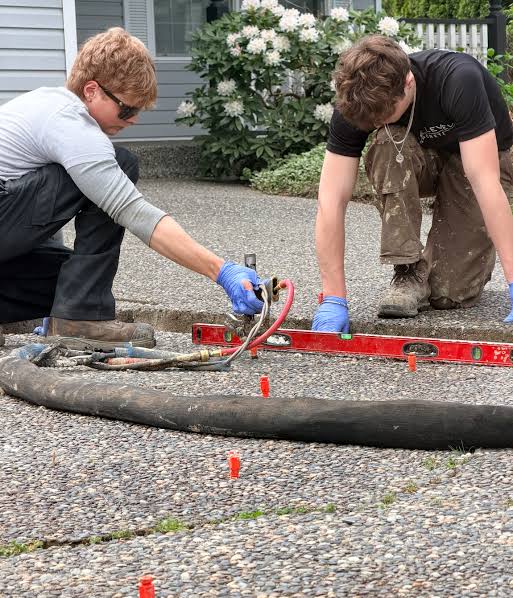
Concrete leveling method statistics: the numbers behind every quote
⏱️ 10 min read · Last updated: 2026
If you are comparing concrete leveling quotes, the numbers matter more than the sales pitch. Polyurethane foam and mudjacking can both lift settled slabs, but they differ in cost, speed, durability, and long-term value. The concrete leveling method statistics below bring those differences into focus so you can understand what a fair quote looks like, why prices vary, and when replacement may be the better option.
Source: www.a1concrete.com
- Method adoption split: Polyurethane foam: ~35–45% of residential jobs · Mudjacking: ~30–40% · Slab replacement: ~20–30% (industry estimates, 2026)
- Average success rate: Polyurethane foam: 85–95% · Mudjacking: 70–85% (installer-reported data, 2025)
- Average national cost: Mudjacking $3–$6/sq ft · Foam $5–$8/sq ft · Replacement $8–$15+/sq ft (HomeAdvisor, 2025)
- Completion time: Foam: 2–4 hours · Mudjacking: 3–6 hours · Replacement: 2–7 days
- Material weight: Polyurethane foam weighs ~2.5–4 lbs per cubic foot vs. mudjacking slurry at 100+ lbs per cubic foot
The five concrete leveling method statistics that matter most in 2026
These five figures define the market right now. They frame every quote you’ll receive and set up the comparisons that follow.
- $3–$6 per square foot — the national average cost of mudjacking in 2025, according to HomeAdvisor’s cost guide
- $5–$8 per square foot — the typical range for polyurethane foam leveling, reported across multiple industry sources including Fixr.com
- $8–$15+ per square foot — what full slab replacement runs, per National Association of Home Builders project data
- 35–45% — estimated share of residential leveling jobs using polyurethane foam in 2026, up from roughly 15% in 2015
- 85–95% vs. 70–85% — the reported long-term success rate gap between foam leveling and mudjacking
Your actual numbers will vary by region, project size, slab accessibility, and soil conditions. Even so, these ranges give you a useful starting point for evaluating any quote.
What percentage of homeowners choose foam over mudjacking?
Polyurethane foam now accounts for roughly 35–45% of residential concrete leveling jobs in 2026. Mudjacking holds 30–40%, and slab replacement covers the remaining 20–30%. That shift is dramatic compared with a decade ago, when foam barely registered in most markets.
That change did not happen by accident. Faster completion times, lighter material, and stronger long-term results all pushed foam forward between 2018 and 2023. Most foam jobs finish in under four hours, which makes the method appealing for homeowners who want less disruption. PolyLevel, the largest foam leveling franchise in the U.S., expanded from roughly 150 certified installers in 2015 to over 400 by 2024.
Regional patterns still matter, though. In Sun Belt states like Texas, Florida, and Arizona, some contractors report that 60% or more of their leveling work is foam-based. Across the Midwest and Northeast, mudjacking still holds a larger share because established companies have deeper roots and local crews often stay with familiar methods. Those regional patterns help explain why national averages do not always match your neighborhood.
Slab replacement remains the choice for about one in five residential jobs. It is typically reserved for slabs with severe structural damage or underlying problems that leveling alone cannot address. Replacement success rates hover near 98% when drainage and compaction are handled correctly, but the cost and disruption make it a last resort for most homeowners.
With adoption trends in mind, the next question is whether the more popular method also performs better over time. That is where success rate data becomes useful.
What is the average success rate of concrete leveling?
The average success rate ranges from 70–95% depending on the method, with polyurethane foam consistently outperforming mudjacking in long-term outcomes. To compare methods fairly, you also need to understand how the industry measures success.
Most figures come from installer-reported callback data, or the percentage of jobs where a homeowner does not request rework within a defined period, usually two to five years. No universal standard exists, so these numbers are best used as directional guidance rather than exact predictions.
Polyurethane foam leveling maintains a reported success rate of 85–95%. Callbacks, when they occur, typically happen within the first year and trace back to localized soil voids that were not fully addressed during injection. After year one, foam jobs rarely require additional work.
Mudjacking success rates fall in the 70–85% range for long-term outcomes. The heavier cement-soil-water mixture is more prone to settling over time, especially on softer ground. In practical terms, a job that looks similar on day one may age very differently over five or more years.
The single most important number: Polyurethane foam leveling maintains an industry-reported success rate of 85–95%, while traditional mudjacking falls in the 70–85% range for long-term outcomes. That 10–20 percentage-point gap is the core trade-off between the two methods.
Replacement with proper base preparation and drainage functions as a permanent fix with failure rates under 5%. However, the higher success rate comes with a much higher price tag, so it makes sense only when the slab is too damaged to justify leveling.
Now that the performance gap is clear, cost becomes the next part of the decision. The most useful comparison is not just the quote total, but what you are paying for each square foot and each year of service life.
How does the average cost break down by method?
National average leveling costs in 2026 range from $3 per square foot for basic mudjacking to $15+ for full slab replacement, with polyurethane foam landing at $5–$8. Here is how the three methods compare across the factors that matter most when you evaluate a quote.
| Factor | Mudjacking | Polyurethane foam | Slab replacement |
|---|---|---|---|
| Cost per sq ft | $3–$6 | $5–$8 | $8–$15+ |
| Typical project cost | $500–$1,500 | $800–$2,500 | $2,500–$6,000+ |
| Reported success rate | 70–85% | 85–95% | ~98% (permanent) |
| Completion time | 3–6 hours | 2–4 hours | 2–7 days |
| Expected longevity | 5–10 years | 10–20+ years | 20–30+ years |
| Best for | Budget projects, minor settling | Most residential slabs | Severe damage, crumbling concrete |
Several variables push your actual cost above or below these national averages. Project size is the biggest factor because contractors often offer lower per-square-foot rates for larger jobs. A 400-square-foot driveway section usually costs less per foot than a 50-square-foot walkway repair.
Accessibility matters too. Slabs next to a house foundation or under landscaping obstacles require more time and precision, which can add 15–25% to the base cost. Costs also shift by region, with coastal markets and major metros often running 10–20% above national averages while rural areas often come in below. Foam leveling quotes may range from $4 per square foot in parts of the Midwest to $10 in the Pacific Northwest.
The cost-per-year calculation often favors foam over the long term. A mudjacking job at $3 per square foot that needs touch-up work after five years can cost more over a ten-year span than a foam job at $6 per square foot that holds for the full decade.
Of course, cost alone does not explain why some jobs hold up and others do not. The failure rate depends on soil conditions, preparation, and contractor skill, which is why the next section matters.
Why do some leveling jobs fail?
The overall repair failure rate for concrete leveling sits between 10–30% depending on the method. Most failures trace back to three root causes that have little to do with the product itself.
Three common causes of leveling failure
Misdiagnosed soil conditions. The contractor did not account for expansive clay, loose fill, or a high water table. Foam injected into expansive clay can perform well initially, but if the underlying soil keeps shifting, the slab will move again. A proper assessment should include a soil probe or at minimum a visual inspection of drainage patterns around the slab.
Inadequate slab preparation. Debris, roots, and loose material under the slab prevent proper bonding and support. This workmanship issue affects both mudjacking and foam jobs. Industry data consistently shows that contractors who invest more time in pre-injection preparation produce lower callback rates.
Unrealistic expectations. Leveling lifts a settled slab — it does not fix cracks, restore structural integrity, or address problems beneath the surface. A slab with severe cracking or spalling may need leveling and cosmetic repair, or outright replacement.
Contractor experience also plays a measurable role. Professionals who level 50+ slabs per year consistently show lower callback rates than those doing fewer than 10. More experienced contractors diagnose soil conditions more accurately, prepare slabs more thoroughly, and adjust technique to local conditions. That is why an experienced contractor may charge 10–15% more while still delivering better long-term value.
Once you understand the failure points, it becomes easier to apply the numbers to your own project. The right method depends on slab condition, soil type, and how long you want the repair to last.
How should you read these numbers for your project?
Start with four factors: your specific slab size, the severity of settling, local contractor availability, and whether you need a quick fix or a 20-year solution. National averages get you in the ballpark, but local quotes and conditions drive the final decision.
- Minor settling (under 1 inch), structurally sound slab: Either mudjacking or foam works. Get quotes for both and compare total cost, not just the per-square-foot rate. Foam is faster; mudjacking is cheaper upfront.
- Moderate settling (1–2 inches) or slab near a foundation: Lean toward polyurethane foam. The lighter material will not stress surrounding soil, and foam injection gives more control near structures.
- Cracked, crumbling, or unevenly settling slab (2+ inches): Get a replacement estimate alongside leveling quotes. Sometimes the numbers make replacement the better long-term play.
- Clay-heavy soil or flood-prone area: Prioritize foam over mudjacking. The weight of mudjacking slurry can worsen soil compression in these conditions.
Gather at least three quotes. For each contractor, ask for the recommended method, the reason behind it, warranty terms, and how many similar jobs they have completed in your area over the past year. The concrete leveling statistics on this page give you context, but the contractor’s local track record tells you what to actually expect.
If you want a broader comparison of durability and project fit, the next step is to look at method-by-method performance in more detail. For that, our guide on concrete leveling statistics breaks down the data by region and project type.
- Foam leveling now holds an estimated 35–45% of the residential market, driven by faster completion times and better long-term durability.
- The success rate gap between foam (85–95%) and mudjacking (70–85%) is real — but contractor skill and soil conditions matter as much as the method you choose.
- For most residential projects, polyurethane foam offers the best balance of cost ($5–$8/sq ft), speed (2–4 hours), and longevity (10–20+ years).
- Always compare total project cost and warranty terms — not just the per-square-foot price — when evaluating concrete leveling quotes.
Frequently asked questions about concrete leveling method statistics
What are the latest concrete leveling statistics for 2026?
Polyurethane foam costs $5–$8 per square foot with an 85–95% success rate, mudjacking costs $3–$6 per square foot with a 70–85% success rate, and full slab replacement costs $8–$15+ per square foot. Foam now accounts for roughly 35–45% of residential leveling jobs nationwide.
How to interpret leveling success rate data step by step?
First, check whether the success rate is based on callbacks within two years or five years — longer timeframes give more reliable data. Second, ask whether the figure covers all soil types or only favorable conditions. Third, compare the success rate against the cost difference: a method with a 10% higher success rate may justify a 20–30% higher price over the project’s lifetime.
Mudjacking vs foam adoption — which is more popular?
Polyurethane foam has overtaken mudjacking in total market share at an estimated 35–45% vs. 30–40% in 2026. However, mudjacking still leads in many Midwest and Northeast markets where established companies have deeper roots. Regional contractor availability often matters more than method preference.
Why do some leveling jobs fail according to the data?
Most leveling failures (roughly 10–30% of jobs, depending on the method) stem from three causes: misdiagnosed soil conditions, inadequate slab preparation before injection, and unrealistic homeowner expectations about what leveling can fix. Contractor experience is the strongest predictor of a successful outcome.
How much does the average leveling job cost by the numbers in 2026?
A typical residential concrete leveling project costs $500–$2,500 for foam or mudjacking, compared to $2,500–$6,000+ for full slab replacement. The national average per-square-foot cost is $3–$6 for mudjacking, $5–$8 for polyurethane foam, and $8–$15+ for replacement, according to 2025–2026 industry cost data.
What’s the typical return on investment for leveling vs. replacement?
Concrete leveling typically restores 100% of a slab’s functional value at 30–50% of the cost of replacement. For most residential walkways and driveways, leveling pays for itself immediately in restored safety and curb appeal. Replacement offers a longer lifespan but rarely makes financial sense unless the slab is structurally compromised.
The bottom line
Polyurethane foam has earned its place as the default recommendation for most residential projects in 2026. It offers the best ratio of success rate to cost. Mudjacking still works for budget-conscious projects on stable soil, and replacement remains right for severely damaged slabs. For most homeowners, the numbers favor foam.
Still, statistics should support a local assessment rather than replace it. Pull three quotes this week, then compare per-square-foot cost, warranty terms, and how many similar jobs each contractor has completed in your area over the past year. The data on this page gives you context; the contractor’s local track record tells you what to actually expect.
For a deeper comparison of methods, including preparation requirements and regional performance data, see our full guide on mudjacking vs polyjacking vs replacement.
See also: concrete leveling statistics
Related: polyjacking cost vs mudjacking cost
Related: concrete leveling vs replacement cost
Related: polyurethane foam injection pros and cons
Related: how to choose a concrete leveling method
See also: how to choose a concrete leveling method
See also: concrete leveling statistics
See also: concrete leveling method comparison chart