How long does concrete leveling last? Real lifespans by method
⏱️ 7 min read · Last updated: 2026
- Polyurethane foam lifespan: commonly 5–10 years; in well-drained, stable soil conditions, results lasting beyond 10 years are reported.
- Mudjacking slurry lifespan: typically 2–5 years before the heavier slurry begins to compact or wash out, especially under repeated freeze-thaw stress.
- Freeze-thaw cycles per year — Midwest: Minneapolis and Chicago commonly see 40–60 freeze-thaw cycles annually, accelerating soil movement beneath slabs.
- Concrete lifting warranty: most polyurethane installers offer a 2–5 year workmanship warranty; mudjacking warranties are typically 1–2 years.
- Failure rate factor: poor subsurface drainage is the leading cause of early leveling failure regardless of which method was used.
Is foam leveling worth double the price? Usually yes — and the reason is under the slab, not on the invoice. How long does concrete leveling last is the question most homeowners ask only after one method fails them. The honest answer is that method matters less than what is happening to the soil beneath the slab — and the climate above it.
I’ve watched mudjacking quotes come in at $800 and foam quotes at $1,600 for the same 40-square-foot entry pad. The price gap is real, but so is the performance gap, especially in cold climates where soil moisture cycles through freezing and thawing dozens of times each winter. The method you choose, and how well the underlying drainage problem is addressed, largely determines whether you are calling a contractor again in two years or in ten.
Polyurethane vs. mudjacking: what the lifespan numbers actually mean
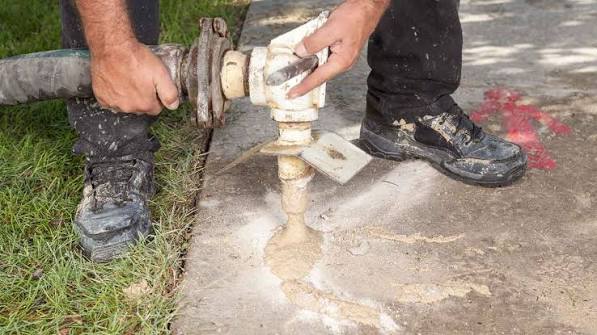
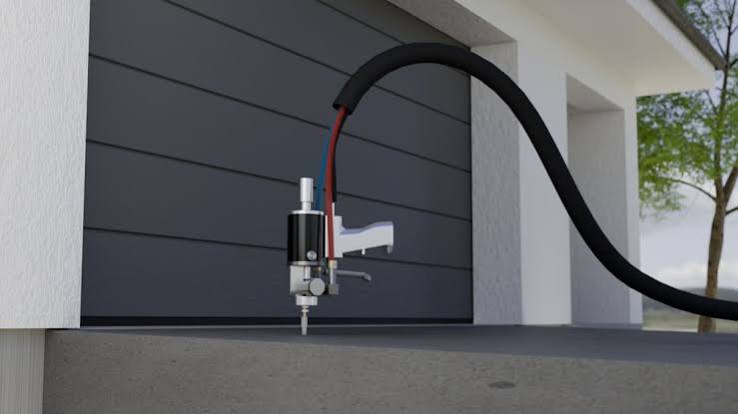
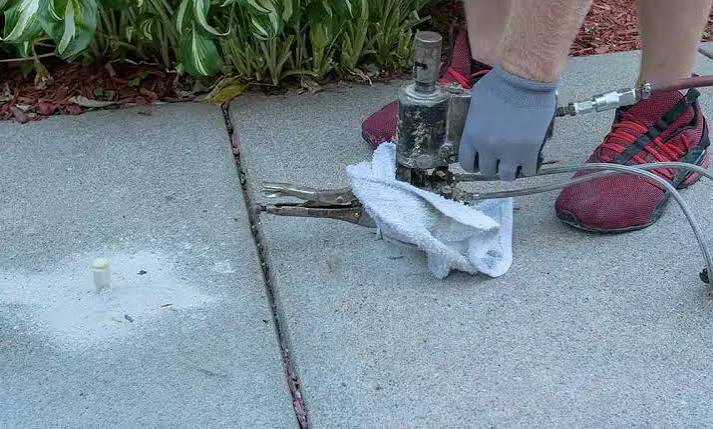
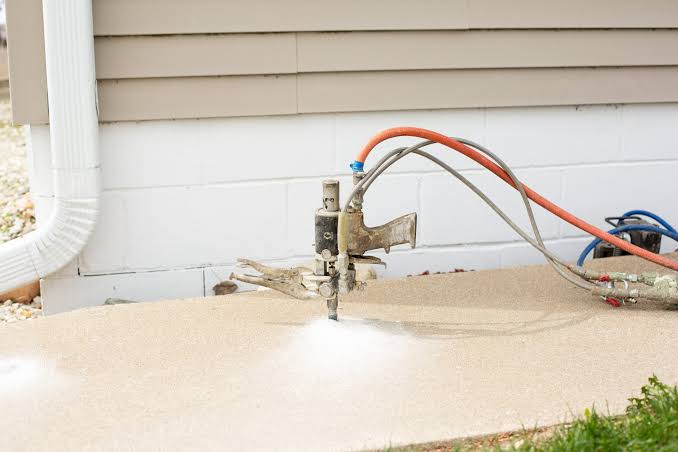
Polyurethane foam leveling lasts longer than mudjacking in nearly every climate condition — but the gap is widest where soil moisture is a problem. Polyurethane foam is injected as a two-part liquid that expands, cures rigid within 15 minutes, and adds almost no weight to the subbase. Mudjacking slurry — a mix of water, soil, and cement — is heavier, cures slowly, and is porous enough to absorb moisture over time.
That porosity is the core issue. Mudjacking slurry can absorb water, soften during wet seasons, and compress further under slab load. Polyurethane foam does not absorb water. That single difference accounts for most of the lifespan gap between the two methods.
| Factor | Polyurethane foam | Mudjacking slurry |
|---|---|---|
| Typical lifespan | 5–10 years | 2–5 years |
| Weight added to subbase | Negligible (2–4 lbs/cu ft) | Heavy (100–150 lbs/cu ft) |
| Water absorption | None — closed-cell structure | Moderate — porous material |
| Cure time before use | 15–30 minutes | 24–72 hours |
| Freeze-thaw resistance | High | Moderate to low |
| Typical job cost (40 sq ft pad) | $1,200–$2,000 | $600–$1,100 |
| Workmanship warranty | 2–5 years (most installers) | 1–2 years |
Polyurethane foam’s closed-cell structure means it holds its shape under load and adds no weight to already-compromised subsoil — two properties that directly extend service life compared to mudjacking slurry.
If you are weighing costs, reviewing walkway leveling cost per square foot data helps you see whether the foam premium actually pencils out over a 5-year horizon. In most Midwest cases, it does.

Does freeze-thaw shorten the life of slab jacking?
Yes — freeze-thaw cycles are the single biggest environmental threat to any slab jacking repair, and they affect mudjacking far more severely than polyurethane foam. When soil moisture freezes, it expands by roughly 9 percent in volume. That expansion pushes upward against the slab. When it thaws, the soil contracts and can leave voids. Do that 40 to 60 times in a single winter season, and even a well-executed mudjacking job starts losing ground.
The freeze-thaw cycle works against mudjacking slurry in two ways. First, the slurry itself is porous and retains moisture, so it participates in the freeze-thaw movement directly. Second, the additional weight of the slurry compresses the already-soft subbase soil more aggressively after each thaw cycle. Polyurethane foam avoids the first problem entirely because its closed-cell structure holds no moisture.
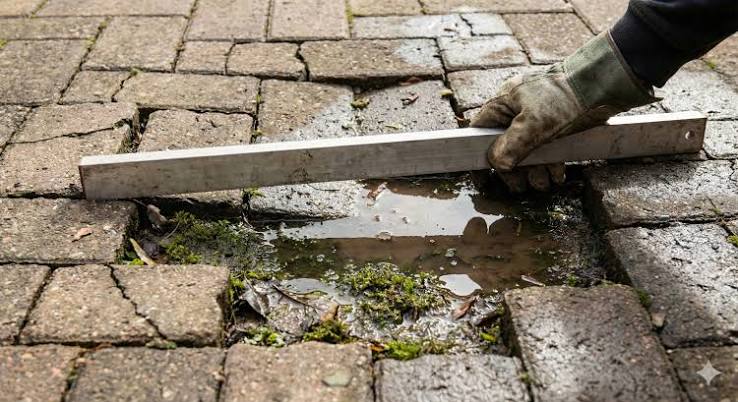
The damage pattern is observable: look for a lifted section that has settled unevenly — one corner down, the rest still level. That asymmetric drop is a classic sign that freeze-thaw movement reopened a void on one side. Symmetric re-settling (the whole panel drops uniformly) usually points to a drainage issue rather than freeze-thaw alone.
Choosing the best time of year for concrete leveling also affects longevity. Spring — after the last hard freeze but before summer heat — gives the repair the best conditions to cure and stabilize before the next freeze-thaw season begins.
How many years will concrete leveling last in Minnesota winters?
In Minnesota and similar upper-Midwest climates, polyurethane foam leveling realistically lasts 5–8 years; mudjacking lasts 2–4 years before noticeable resettlement in most cases. Minneapolis typically logs 50–60 freeze-thaw cycles per year, which is among the highest in the continental United States — and that constant cycling is brutal on subbase soil regardless of which repair material sits above it.
The soil type matters significantly here. Clay-heavy soils common across much of Minnesota hold moisture longer than sandy or loam soils. More retained moisture means more dramatic freeze-thaw expansion and contraction. If your property has clay soil and poor surface drainage — say, a walkway that collects runoff from a downspout — expect results toward the shorter end of any lifespan estimate.
One practical adjustment for cold climates: seal concrete joints and cracks in the repaired slab within 30 days of leveling. Joint sealant keeps liquid water from infiltrating the subbase, which is the primary source of the soil moisture that drives freeze-thaw damage. It is a $50–$150 DIY step that meaningfully extends the repair.

The real reason leveling jobs fail early (it’s not the method)
Poor drainage causes more early leveling failures than any method-related shortcoming. A slab sinks because the soil beneath it lost density — and soil loses density because water moved through it, eroding fine particles or softening compacted fill. If that water source is not redirected after leveling, the same process restarts underneath the newly lifted slab.
The water sources are almost always visible if you look: a downspout that terminates within 4 feet of the slab edge, a lawn that grades toward the concrete rather than away, or an irrigation head that sprays directly onto the soil at the slab perimeter. None of these are corrected by the leveling crew. They are your responsibility before the truck pulls away.
Secondary failure causes, in order of frequency, are root intrusion from nearby trees, plumbing leaks running beneath the slab, and inadequate compaction of fill soil placed during original construction. Root intrusion is identifiable by asymmetric lifting — one side of a panel rises while the other sinks, often with a visible root line nearby. Plumbing leaks show up as soft, perpetually moist soil even during dry spells.
For a broader look at how these failure patterns track across different project types, the concrete leveling statistics data is worth reviewing — particularly the breakdown of repeat repair rates by cause.
How to make leveled concrete last longer — six specific steps
Extending the life of a leveling repair is mostly about what you do in the first 90 days and the first winter after the job. The repair itself is stable quickly, but the surrounding soil and drainage conditions need attention before the next major weather event tests them.
- Redirect downspouts immediately. Extend any downspout that terminates within 6 feet of the repaired slab to discharge at least 6–10 feet away, ideally to a permeable lawn area. This is step one and the most impactful single action you can take.
- Seal all control joints within 30 days. Use a polyurethane caulk (not latex) rated for concrete. Check that existing sealant in adjacent joints has not cracked — replace any that has separated from the joint wall. This blocks the primary infiltration path for soil moisture.
- Correct negative grade at the slab perimeter. Soil at the slab edge should slope away at a minimum of 1 inch per foot for the first 6 feet. If it grades toward the slab, top-dress with soil and pack it firm before the first hard freeze.
- Avoid de-icing salts on or near the repaired slab. Sodium chloride and calcium chloride accelerate spalling in concrete and increase soil moisture through osmotic effects. Use sand or a magnesium chloride product at lower concentrations as an alternative.
- Inspect the repair after the first winter. Check for joint gaps that have reopened, any new low spots at the slab perimeter, or cracks wider than 1/4 inch. Catching these early — before the next freeze season — prevents a small re-settlement from becoming a larger one.
- Keep tree roots managed. If a tree within 15 feet of the slab is growing actively, consider a root barrier installation. Root barriers — physical membranes driven 18–24 inches into the soil — redirect roots downward rather than laterally beneath the concrete.
The single highest-return action after any leveling job is sealing control joints within 30 days — a $50–$150 step that directly blocks the moisture infiltration responsible for most early repair failures.
What a concrete lifting warranty actually covers in 2026
Concrete lifting warranties cover workmanship — meaning the installer’s repair — not the underlying soil condition or external causes of resettlement. That distinction matters enormously when a claim comes in. If a slab re-settles because a downspout was discharging water at the slab edge the whole time, most warranty language excludes that claim because the cause was external to the repair itself.
Typical 2026 warranty terms look like this:
| Method | Typical warranty length | What’s covered | Common exclusions |
|---|---|---|---|
| Polyurethane foam | 2–5 years | Re-settlement of repaired panels | Drainage failures, tree roots, new construction nearby |
| Mudjacking slurry | 1–2 years | Re-settlement of repaired panels | Same, plus freeze-thaw events in some contracts |
Before signing any contract, ask two specific questions: Does the warranty exclude re-settlement caused by freeze-thaw cycles? And what qualifies as a “workmanship defect” versus an “external cause”? Some mudjacking contracts in northern states explicitly carve out freeze-thaw events. That is a significant exclusion in a market that sees 50-plus freeze-thaw cycles per year.
When leveling stops making sense and replacement takes over
Leveling stops being cost-effective when a slab has been lifted twice within five years, or when more than 40 percent of the slab surface shows cracking wider than 1/4 inch. At that point, the concrete itself — not just the subbase — has degraded to a point where continued leveling is patching a failing structure.
The observable signs that replacement beats leveling are specific. Look for cracking that runs through the full thickness of the slab (tap it — a hollow sound at a crack indicates through-fracture). Look for sections that have broken into three or more separate pieces, since leveling requires a slab that can distribute load uniformly. And look for spalling deeper than 1/2 inch across large portions of the surface — that is the concrete’s aggregate bond failing, not a subbase problem.
Concrete replacement costs roughly $6–$12 per square foot for walkways and entry pads in 2026, compared to $3–$7 per square foot for foam leveling. The math shifts in favor of replacement once you factor in two or three repeat leveling jobs over a decade. Understanding when walkway leveling is the right call — and when it is not — is the decision that separates a cost-effective repair from a recurring expense.
- Polyurethane foam lasts 5–10 years; mudjacking lasts 2–5 years — the gap is widest in climates with 40+ freeze-thaw cycles per year.
- Poor drainage causes more early failures than any method shortcoming — redirect downspouts and correct grade before the next rain season.
- Seal concrete control joints within 30 days of leveling; it is the single highest-return maintenance step you can take.
- Warranty language matters: ask specifically whether freeze-thaw events are excluded before signing any mudjacking contract in a cold climate.
Common questions about how long concrete leveling lasts
What determines how long concrete leveling lasts after the job is done?
The three main factors are drainage at the slab perimeter, local freeze-thaw cycle frequency, and the soil type under the slab. Clay soil in a climate with 50+ annual freeze-thaw cycles is the hardest condition — even polyurethane foam repairs may trend toward the 5-year mark rather than 10 in those circumstances.
How can I make my leveled concrete last longer without spending more money?
Seal control joints within 30 days using polyurethane caulk, extend downspouts 6–10 feet from the slab edge, and inspect after the first winter. These three steps cost under $200 combined and directly address the top causes of early repair failure — moisture infiltration and soil moisture accumulation.
Polyurethane vs. mudjacking — which lasts longer in a cold climate?
Polyurethane foam lasts significantly longer in cold climates — typically 5–8 years in upper-Midwest conditions versus 2–4 years for mudjacking. Polyurethane’s closed-cell structure absorbs no moisture, so it does not participate in freeze-thaw expansion the way porous mudjacking slurry does.
Why did my mudjacking job fail within two years of being done?
The most common causes are an unaddressed drainage problem that continued washing out subbase soil, freeze-thaw cycling in clay-heavy soil, or slurry that was mixed with too much water and lost density as it cured. Check whether water pools near the slab edge after rain — that is the most likely culprit.
Does concrete leveling come with a warranty and how long does it typically last?
Most polyurethane foam installers offer 2–5 year workmanship warranties in 2026; mudjacking warranties run 1–2 years. Both cover re-settlement of repaired panels but typically exclude causes like drainage failures, root intrusion, or — in some cold-climate mudjacking contracts — freeze-thaw damage specifically.
How many years will concrete leveling last in Minnesota winters specifically?
In Minnesota, polyurethane foam leveling realistically lasts 5–8 years; mudjacking lasts 2–4 years. Minneapolis sees roughly 50–60 freeze-thaw cycles annually — among the highest in the U.S. — which accelerates subbase soil movement. Clay soil and poor drainage push results toward the shorter end of those ranges.
When does it make more sense to replace concrete than to keep leveling it?
Replace rather than level when a slab has been lifted twice in five years, when cracks wider than 1/4 inch cover more than 40 percent of the surface, or when the slab has fractured into three or more separate pieces. At that point, the concrete structure itself has failed — not just the subbase.
The bottom line
Polyurethane foam leveling is the right call for most homeowners in 2026, especially in cold climates — its 5–10 year lifespan versus mudjacking’s 2–5 years reflects a real, material difference, not marketing. But the method only matters as much as the drainage problem you fix alongside it. A perfectly executed foam injection will still re-settle in three years if a downspout is dumping water at the slab
See also: concrete leveling statistics
See also: best time of year for concrete leveling
See also: walkway leveling