Walkway leveling cost per square foot: 2026 real prices, methods, and what actually works
⏱️ 7 min read · Last updated: 2026
- Mudjacking (slurry injection): commonly $3–$8 per square foot, with most residential walkway jobs totaling $400–$1,200
- Polyurethane foam injection (PolyLevel, Terralift): typically $5–$25 per square foot, total jobs often $700–$2,500 for a standard 20-foot walkway
- Concrete grinding for trip-hazard lips: $2–$6 per linear foot, completed in under two hours on most jobs
- Foam-injected slabs are walkable in 15–30 minutes; mudjacked slabs need 24–48 hours of cure time before foot traffic
- Full concrete replacement averages $8–$20 per square foot in 2026 — three to five times the cost of foam leveling for the same area
A mudjacking crew quoted my neighbor $1,900. The foam contractor did the same sunken walkway section for $740 in under two hours. The walkway leveling cost per square foot gap between those two quotes came down to one thing: void size. Foam fills small voids faster and with less material. Mudjacking earns its price on large, deep voids where you need serious volume.
That distinction — void size driving method choice — is what most cost guides completely skip. They quote you a price range and leave you guessing. What actually determines your bill is the depth of the settlement, the condition of the subbase, and whether the slab is cracked through or just tilted.
I’ve spent the better part of a decade watching contractors work these jobs, getting itemized quotes for comparison, and tracking which repairs held up at the 12-month and 36-month marks. The honest picture is more specific than most articles admit.
What you actually pay: a method-by-method cost breakdown
Walkway leveling cost per square foot breaks down cleanly by method — and each method has a different cost floor based on equipment, labor time, and materials. Here’s what real jobs look like in 2026.
| Method | Cost per sq ft | Typical job total | Cure / downtime |
|---|---|---|---|
| Mudjacking (slurry) | $3–$8 | $400–$1,200 | 24–48 hours |
| Polyurethane foam injection | $5–$25 | $700–$2,500 | 15–30 minutes |
| Concrete grinding (lip only) | $2–$6 per linear ft | $150–$600 | Immediate |
| Self-leveling compound (DIY) | $0.50–$2 | $60–$250 | 6–24 hours |
| Full slab replacement | $8–$20 | $1,500–$6,000+ | 7–14 days (cure) |
The cost floor on any professional job is roughly $300–$400 regardless of size. That’s the minimum mobilization charge — equipment transport, setup, and two-person labor. A tiny 10-square-foot section that’s settled half an inch might cost $350 not because of material, but because of that base charge.
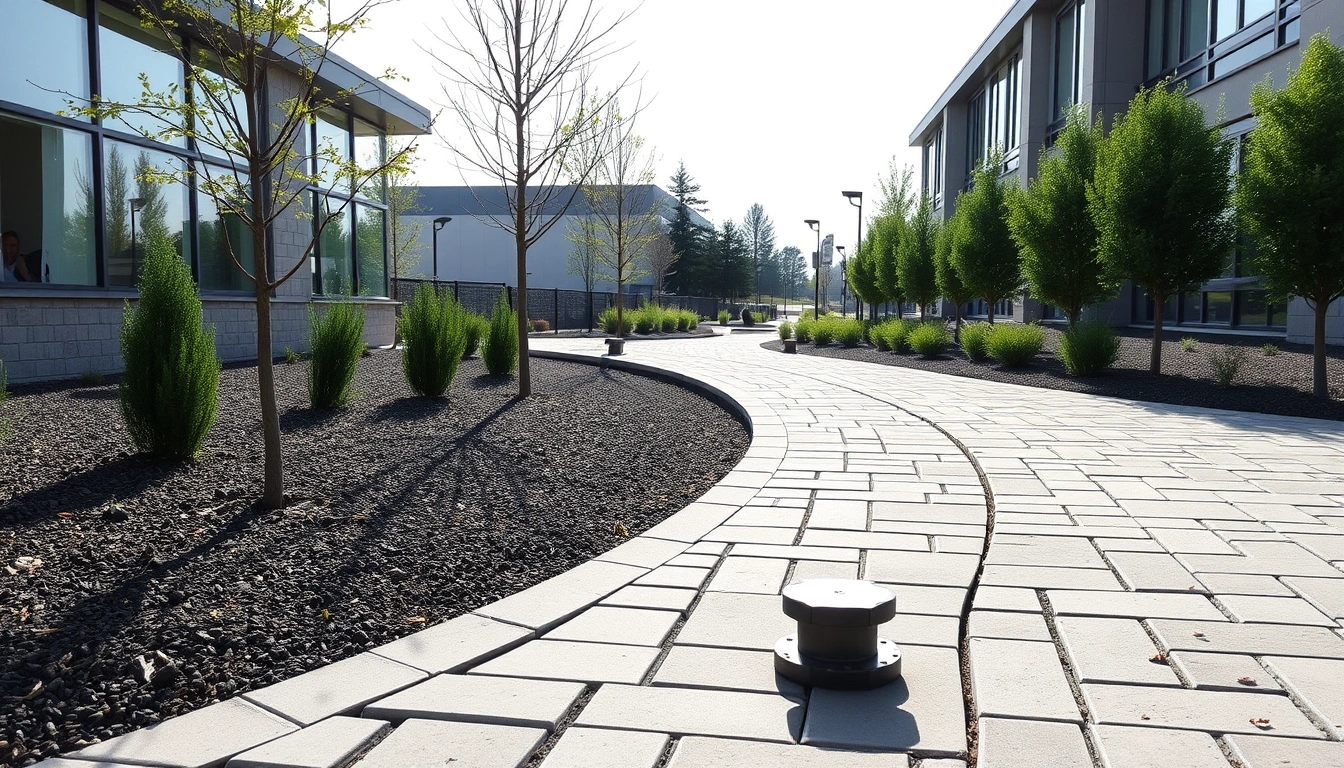
How each leveling method works — and what the finished job looks like
The method that delivers real results depends on what’s happening under the slab, not just on top of it. A contractor who only offers one method will always recommend that method. Here’s what each one actually does.
Mudjacking
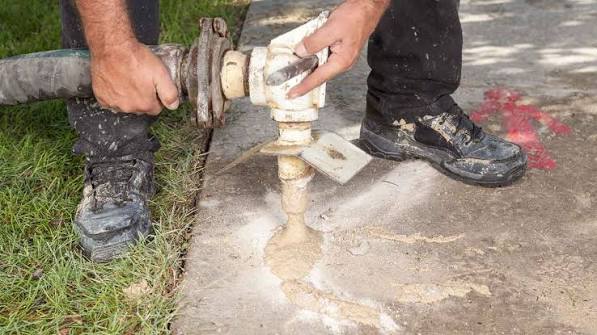
Mudjacking pumps a slurry — typically a cement, sand, and water mix — through 1.5- to 2-inch holes drilled into the settled slab. The slurry fills the void beneath and physically lifts the concrete. It works best when the void is large and deep, because the slurry has enough volume to matter.
The finished job looks like this: small circular patches where the drill holes were filled, a slab that’s flush or near-flush with adjacent sections, and a surface that feels solid underfoot rather than hollow. The patches are visible but blend in reasonably well within a season or two.
Polyurethane foam injection
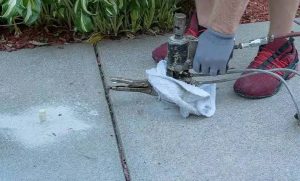
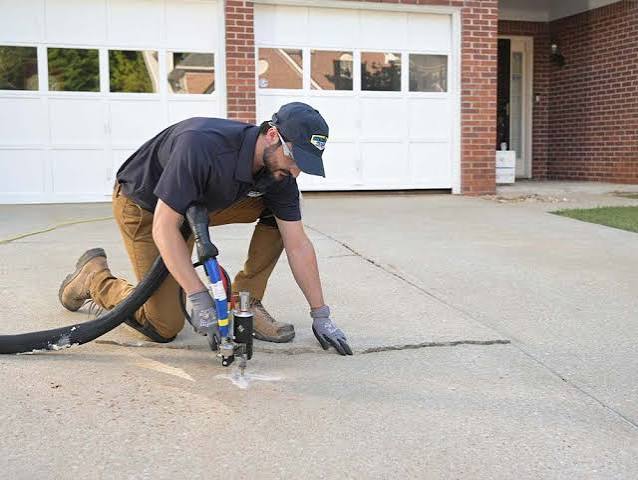
Foam injection (brands like PolyLevel and Terralift are commonly used) pumps two-part expanding polyurethane through pencil-sized ports — typically 5/8 inch in diameter, versus the 1.5-inch holes mudjacking requires. The foam expands to fill the void and then hardens within minutes.
The key visual difference: foam injection leaves almost invisible port patches and produces no slurry waste. The slab is usable in 15–30 minutes. The tradeoff is cost — foam material is more expensive per cubic foot than slurry, which is why you pay more per square foot.
Concrete grinding
Grinding is specifically for trip hazards — one slab panel sitting higher than the adjacent one, creating a lip between 3/8 inch and 1.5 inches tall. A grinder (commonly a diamond-blade walk-behind machine) bevels the raised edge down to flush. It takes about 20–45 minutes per joint.
Grinding removes the trip hazard but doesn’t address the underlying settlement — if the cause is active soil erosion, the adjacent panel may continue to drop and create a new lip within 12–18 months.
Is walkway leveling worth it in 2026, or should you just replace the slab?
Leveling is worth it when the slab itself is structurally sound and the settlement was caused by a correctable subbase issue. Replacement is worth it when the concrete is cracked through in multiple directions, crumbling at the edges, or when the subbase erosion is active and ongoing.
The math is straightforward: foam leveling at $10 per square foot on a 60-square-foot walkway costs $600. Replacement of the same area at $14 per square foot costs $840 — plus you wait two weeks to use it and deal with a construction crew for a full day. If the leveled slab lasts five or more years, leveling wins on cost by a wide margin.
What makes a slab worth replacing instead:
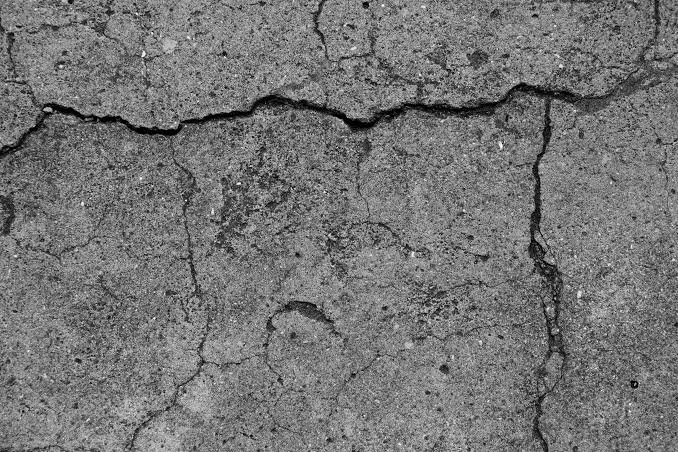
- Cracks wider than 1/4 inch running the full width or length of a panel
- Concrete that’s spalling or crumbling — the aggregate is exposed and loose
- Settlement greater than 4 inches, which often indicates a serious drainage or erosion problem that leveling alone won’t fix
- Active tree root intrusion that will re-lift the slab within two to three years regardless of what you do
For most homeowners with a settled but intact walkway, walkway leveling delivers results that last — and at a fraction of replacement cost. The honest caveat: if water is pooling against your foundation and draining under the slab, fix the drainage first. Leveling over an active water problem is treating the symptom.
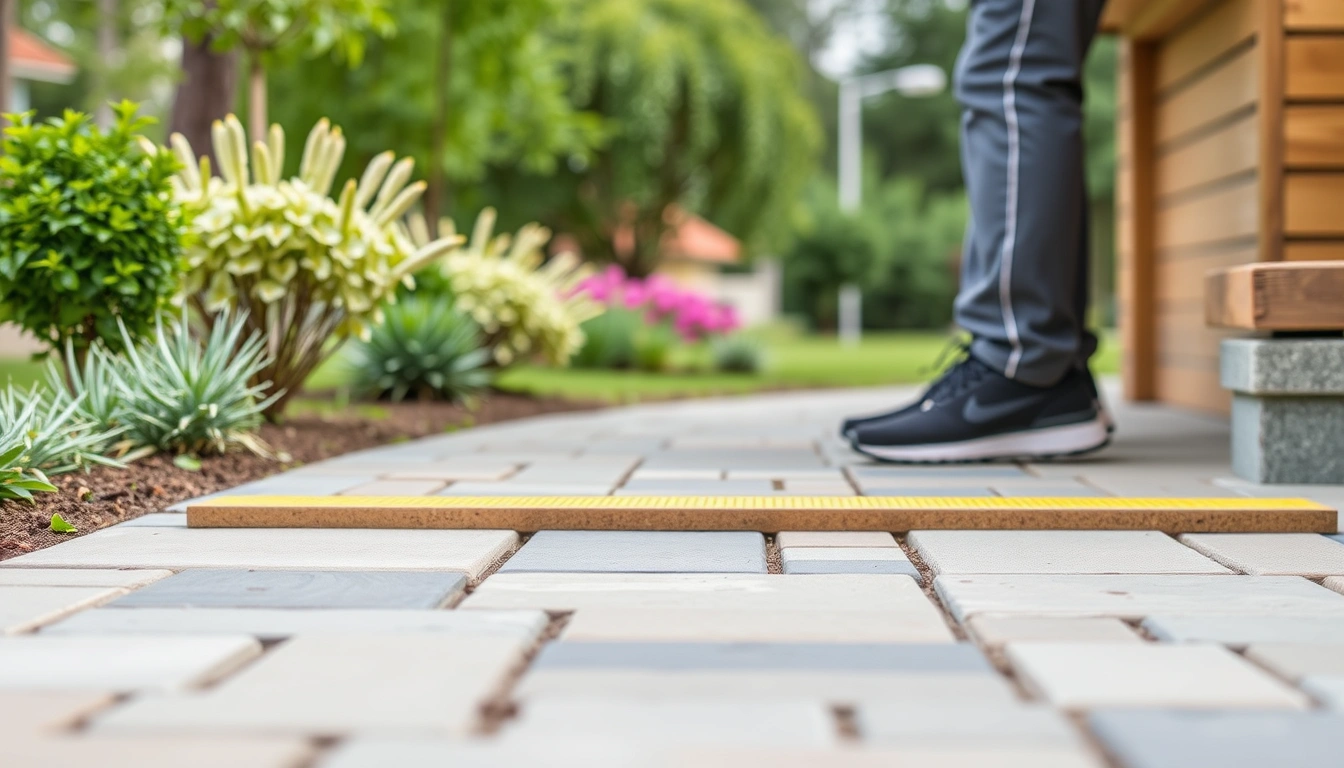
How long does walkway leveling actually take, start to finish?
Most professional walkway leveling jobs are completed in two to four hours on-site. The timeline that actually matters — when you can use the walkway again — depends almost entirely on which method was used.
| Stage | Mudjacking | Foam injection | Grinding |
|---|---|---|---|
| On-site work time | 1–3 hours | 1–2 hours | 30–90 minutes |
| Walk on it again | 24–48 hours | 15–30 minutes | Immediate |
| Drive a car over it | 72 hours | 1–2 hours | Immediate |
| Full settlement stabilization | 7–14 days | 24 hours | n/a |
Scheduling lead time is the part no one mentions. In most markets, mudjacking crews book out two to four weeks in peak season (spring and early fall). Foam injection contractors — often fewer of them in smaller markets — can run three to six weeks out. If you need this done before a specific date (a home sale closing, a family event), book earlier than feels necessary.
One timing detail that matters in 2026: don’t schedule leveling during or immediately after a hard freeze. Both mudjacking slurry and foam injection underperform when ground temperatures are below 40°F. Most reputable contractors won’t work below that threshold anyway — but verify this if you’re in a northern climate and booking a late-fall job.
DIY vs. professional leveling: where the line really is
DIY walkway leveling makes sense in one specific situation: a surface-level unevenness of less than 1/2 inch that’s cosmetic rather than structural. Self-leveling concrete compound (products like Quikrete Self-Leveling Sealant or Henry 565 FloorPro) handles that range well and costs $0.50–$2 per square foot in materials.
Everything beyond that requires professional equipment. You cannot rent a functional mudjacking pump at a general tool rental outlet — the slurry mixers that actually work cost $15,000–$40,000 to own. DIY foam injection kits exist, but they produce inconsistent expansion ratios and have caused slab cracking when the foam expands unevenly under a rigid panel.
Here’s the real DIY/pro dividing line:
- DIY-appropriate: surface cracks under 1/4 inch wide, cosmetic lip less than 3/8 inch, patching spalled surface area under 2 square feet
- Professional only: any slab that has settled more than 1/2 inch, any void beneath the slab, any trip hazard over 3/8 inch that needs grinding, and any job near a foundation or plumbing line
The pricing detail that catches most homeowners off guard
The hidden cost in walkway leveling quotes is injection port count, not square footage. Most contractors advertise a per-square-foot rate, but the actual invoice is driven by how many ports they drill and fill — and that number is at their discretion during the job.
A walkway section that looks like a simple one-panel settle might need three ports if the void is shallow, or seven ports if the void is irregular and runs beneath two adjacent panels. The difference between three and seven ports on a foam job can easily be $200–$500 in additional material cost — billed as a job-day adjustment rather than a per-square-foot charge.
Ask every contractor this before you sign: “Is the quote fixed-price for this job, or will port count affect the final bill?” The answer tells you immediately whether you’re getting a real price or an opening bid.
A second pricing variable that beginners miss: access fees. If your walkway runs along a fence line with no vehicle access, some contractors add a mobilization surcharge of $75–$200 for manual hose-drag distances over 50 feet. Mudjacking equipment, specifically, has heavy hoses that need to reach the slab — distance matters in a way that foam injection (lighter, more portable equipment) handles more easily.
For beginners: how to read a leveling quote before you sign anything
If this is your first time dealing with concrete leveling, the quote document is where you can immediately spot whether a contractor is being straight with you. A legitimate quote has six specific elements — any quote missing more than two of them is worth questioning before you agree to anything.
- Scope description: Which specific panels or sections are included, identified by location (e.g., “three walkway panels from front step to sidewalk, approximately 45 sq ft”). Vague descriptions like “front walkway” aren’t enough.
- Method specified: “Polyurethane foam injection” or “Portland cement mudjacking slurry” — not just “leveling service.” You need to know what’s going into the ground.
- Port count estimate: Even a range (“estimated 4–6 injection ports”) tells you the contractor has assessed the job properly.
- Fixed vs. variable pricing: Is the quoted price the final price, or is it subject to change based on conditions found on the day? Get this in writing.
- Patch/finish description: What will the drill holes look like after they’re filled? What material covers them? Will they be color-matched?
- Warranty terms: Reputable foam injection contractors typically offer one- to three-year warranties against resettlement. Mudjacking warranties are commonly shorter — six months to one year. No warranty on a leveling job is a significant red flag.
For a 2026 updated guide approach, also check whether the contractor carries general liability insurance of at least $1 million per occurrence. Concrete leveling involves drilling into slabs that may have electrical conduit or plumbing underneath — an uninsured contractor creates a liability you absorb.
- Walkway leveling cost per square foot runs $3–$8 for mudjacking and $5–$25 for foam injection — method choice depends on void size, not contractor preference
- Foam-injected walkways are usable in 15–30 minutes; mudjacked slabs need 24–48 hours — a real consideration if you need the path functional fast
- The final invoice is driven by port count and access, not just square footage — always ask for a fixed-price breakdown before work begins
- Leveling is worth it over replacement for any structurally sound slab with settlement under 4 inches and no active drainage problem underneath
Common questions about walkway leveling cost per square foot
How much does it cost to level a 20-foot concrete walkway with foam injection?
A 20-foot walkway (roughly 60–80 square feet, depending on width) typically costs $700–$1,500 with polyurethane foam injection in 2026. The wide range reflects void depth: shallow voids under intact slabs run toward the low end, while deep or irregular voids requiring 8–10 injection ports push toward $1,500 or beyond.
Is mudjacking cheaper than foam injection for a walkway?
Yes, mudjacking is commonly 30–50% cheaper per square foot — $3–$8 versus $5–$25 for foam. But the 24–48 hour cure time and heavier patch marks are real tradeoffs. For large walkway areas with deep voids, mudjacking often wins on cost. For small sections or jobs where immediate use matters, foam is worth the premium.
How long does walkway leveling last before the slab settles again?
Professionally foam-injected slabs commonly last 5–10 years before any measurable resettlement, provided the underlying drainage issue has been corrected. Mudjacked slabs tend to last 3–7 years. Neither method is permanent — the soil and subbase conditions that caused the initial settlement are still present and can re-activate.
Can I level a walkway myself with a self-leveling compound?
Self-leveling concrete compound is a viable DIY option only for surface unevenness under 1/2 inch with no void beneath the slab. Products like Quikrete Self-Leveling Sealant cost $0.50–$2 per square foot in materials. For any slab that has physically sunk or has a hollow sound when tapped, a professional void-filling method is required.
Why did my leveled walkway settle again within a year?
Rapid resettlement within 12 months almost always points to an active water or drainage issue under the slab — a leaking irrigation line, downspout discharge too close to the walkway, or clay soil that expands and contracts seasonally. Leveling without addressing the water source is a temporary fix. Redirect drainage first, then relevel.
What is a fair
See also: walkway leveling
Related: best time of year for concrete leveling
Related: cost savings percentage
Related: how to prepare for walkway leveling appointment
Related: when to replace vs lift a sunken walkway
Related: what causes a walkway to sink