When to replace vs lift a sunken walkway: the 2026 decision guide that actually works
⏱️ 7 min read · Last updated: 2026
- Concrete lifting (polyurethane foam injection) typically costs $3–$8 per square foot versus $10–$18 per square foot for full slab replacement in 2026.
- A standard foam-lifted walkway is walkable again in 1–2 hours; a poured replacement slab requires 24–72 hours of cure time before foot traffic and up to 28 days for full strength.
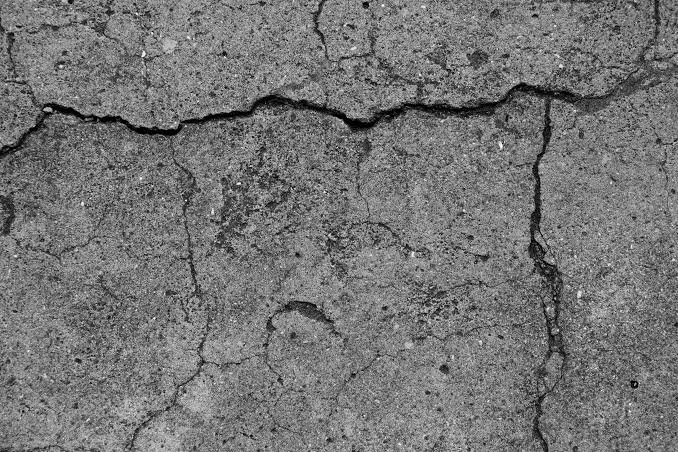
- Slabs with cracks wider than ¾ inch or crumbling edges are poor candidates for lifting — void-fill foam cannot bond fractured concrete back together.
- Mudjacking (slurry injection) costs $3–$6 per square foot but adds significant weight to already unstable soil, making it a worse choice than foam in areas with chronic drainage problems.
- Lifting extends a sound slab’s life by 8–15 years in most cases; replacement restarts the clock entirely with a typical concrete lifespan of 25–50 years.
A contractor quoted my neighbor $4,200 to rip out and repour her front walkway. A second opinion — foam injection — cost $620 and took 90 minutes. The deciding question was exactly what this article covers: when to replace vs lift a sunken walkway, and how to tell which situation you’re actually in.
The honest tension here is that both camps — the concrete guys and the lifting crews — have financial incentives to push their method. Replacement contractors rarely mention lifting. Lifting companies rarely tell you when replacement is the smarter call. After watching this play out across dozens of projects, the answer comes down to three things: slab condition, what caused the sinking, and how old the concrete is.
What actually determines the right answer here
The decision to replace vs lift a sunken walkway rests on four variables — and only one of them is visible from the surface. The four are: crack severity, slab age, the cause of sinking, and soil condition below the slab. Get all four right and the choice becomes obvious. Miss one and you’ll pay for the wrong fix twice.
Crack severity is the fastest filter. Run your finger across any crack in the slab. If it’s wider than ¾ inch, or if one side of the crack sits higher than the other (a sign the slab has broken apart rather than simply shifted), lifting is almost certainly the wrong call. Foam fills the void under the concrete — it cannot fuse two separate pieces of slab back into one.
Cause of sinking matters more than most people realize. Soil washout, poor compaction after initial construction, and seasonal freeze-thaw cycles are all fixable with lifting. Tree root intrusion and active drainage failure are not — the root will keep growing, the water will keep moving soil, and your lifted slab will sink again within a few years.
Slab age is the tiebreaker when everything else looks borderline. Concrete under 25 years old with intact edges and no spalling is almost always worth lifting rather than replacing. Concrete over 30 years old with surface deterioration, exposed aggregate, or flaking (called spalling) has often reached the end of its structural life regardless of whether it’s level.
The single most useful question to ask before calling a contractor: did this slab sink because the soil moved, or because the concrete itself failed? The first is a lifting problem. The second is a replacement problem.
Quick check: If you can answer yes to “the slab is in one piece, mostly smooth on top, and just lower than it used to be,” you’re in lifting territory. If you’re answering yes to “crumbling edges, wide cracks, or the surface flakes when you step on it,” lean toward replacement.
How to read your slab before calling anyone
Before any contractor walks your property, spend 10 minutes doing your own assessment — it protects you from upsells in either direction. Here’s a simple inspection process that takes no special tools.
- Walk the slab and note any rocking. Place one foot on each side of every visible crack. If the slab rocks, the two sections have separated. Mark those joints with chalk.
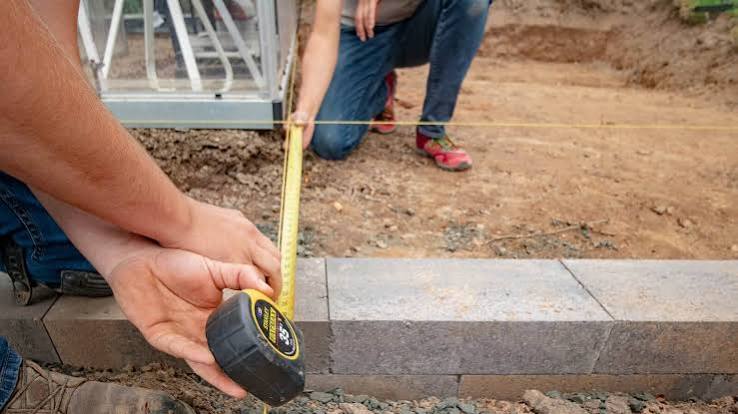
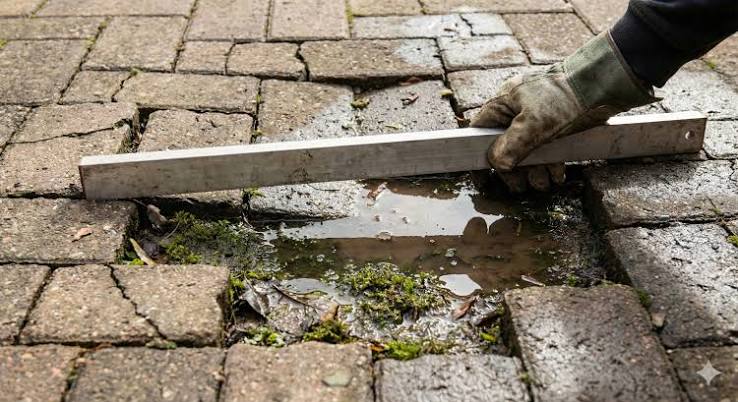
- Measure the drop. Use a 4-foot level laid across the slab. A gap of ¼ inch to 1 inch under the level is typical for a liftable slab. More than 2 inches of drop usually indicates more serious soil loss that may require fill work before lifting.
- Check crack width. A coin is roughly 1/16 inch thick. Stack quarters: three stacked quarters equal about ¼ inch. If the crack swallows five or more stacked quarters easily, you’re past ¾ inch — the threshold where lifting loses its advantage.
- Inspect the surface. Drag your shoe across the concrete. If aggregate (the pea gravel inside the mix) pops up or the surface flakes, the concrete has reached chemical deterioration. That’s not fixable from below.
- Look at the edges. Crumbled, rounded, or missing corners mean the concrete’s structural integrity is compromised across the panel, not just at the surface.
Quick check: If your inspection turns up one or two cracks under ¾ inch wide, a smooth surface, and less than 1.5 inches of drop, you have a strong lifting candidate. Three or more of the red flags above means replacement is likely the better investment.
If lifting is right for you: the exact path forward
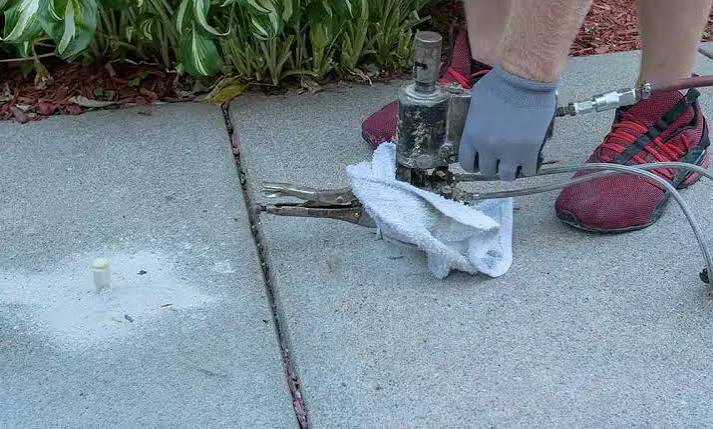
Concrete lifting works by injecting material — either polyurethane foam or a cement-based slurry called mudjacking — through small drill holes in the slab to fill the void below and push the concrete back to grade. Foam is the better choice for residential walkways in 2026 for two reasons: it weighs almost nothing (important if soil instability caused the sinking) and it cures in minutes rather than hours.
Here’s the process from first call to walking on it:
- Schedule a free estimate. Most lifting companies offer free on-site quotes. Get at least two. Ask each contractor specifically: “Is there anything under this slab that would make lifting fail within five years?” A good contractor will tell you if replacement is the honest answer.
- Confirm the method. Ask whether they use polyurethane foam or mudjacking slurry. For walkways under 4 inches thick with moderate soil conditions, foam is generally preferred. Mudjacking can work but adds weight to the subbase — a concern on soft or clay-heavy soils.
- Prepare the work area. Remove any planters, mats, or edge lighting from the walkway. Knowing how to prepare for walkway leveling appointment day can cut the crew’s setup time by 20–30 minutes and reduces the risk of damaged landscaping.
- The injection itself. The crew drills holes roughly 5/8 inch in diameter through the slab, typically every 2–4 feet depending on the void pattern. Foam is injected, expands to fill the void, and the slab rises. The holes are patched with cement. The whole process for a standard 10-by-4-foot walkway takes 45–90 minutes.
- Wait the cure window. With foam, foot traffic is safe in 1–2 hours. With mudjacking, allow 4–6 hours minimum. Do not drive a vehicle over a foam-lifted walkway for 24 hours.
Quick check: If you’ve confirmed a lifting candidate and you’re ready to move forward, the walkway leveling process is straightforward — but timing matters for best results, especially in cold climates.
If replacement is right for you: what changes
Replacement is the right call when the slab itself has structurally failed — not just sunk. This path is more disruptive and more expensive, but it’s the only option that addresses broken concrete, active root intrusion, or severe drainage failure at the same time.
- Get the cause fixed first. If tree roots drove the sinking, address the root system before the pour. If drainage failure washed away the subbase, have a grading or drainage contractor regrade the area. Skipping this step means your new slab will mirror the old one’s fate.
- Have the old slab removed. Concrete demolition generates significant debris — typically 1–2 tons for a standard front walkway. Factor in a haul-away fee, commonly $150–$400 depending on local disposal rates, when comparing quotes.
- Prep the subbase. A properly compacted gravel subbase — typically 4 inches of compacted crushed stone — is what separates a 5-year slab from a 25-year one. Ask your contractor what subbase preparation is included in the quote. If they say “none” on a previously sunken area, push back.
- Pour and finish. Standard residential walkways use 3,000–4,000 PSI concrete at 4 inches thick. Control joints (the lines cut into the surface) should be placed every 4–5 feet to manage cracking as the concrete cures.
- Respect the cure window. Foot traffic is typically safe after 24–48 hours. Full structural strength takes 28 days. Avoid heavy planters, furniture, or vehicle overhang for at least 2 weeks.
Quick check: Replacement makes sense when you answer yes to two or more of these: slab is in multiple pieces, surface is spalling, concrete is over 25 years old, or root/drainage issues caused the original sinking.
Side-by-side: lift vs replace across common scenarios
| Situation | Best path | Why the other option fails |
|---|---|---|
| One panel sunk 1 inch, no cracks wider than ½ inch, concrete under 20 years old | Lift | Replacement wastes structurally sound concrete at 2–4× the cost |
| Multiple panels sunk, cracks wider than ¾ inch, surface flaking | Replace | Foam cannot bond fractured slabs; lifted concrete will crack further at existing weak points |
| Slab sunk due to soil washout after heavy rain event | Lift + drainage fix | Replacement without drainage fix will sink again in 2–5 years |
| Tree root buckled two panels, root still active | Replace (after root resolution) | Lifting over an active root creates a temporary fix; root regrowth re-buckles the slab within 3–7 years |
| Concrete 30+ years old, sunk but surface intact | Lift if budget is tight; replace if long-term value matters | Older concrete may develop new cracks post-lift; replacement offers longer ROI but higher upfront cost |
| Single small panel (under 10 sq ft) dropped ¼ inch at joint | Lift | Replacement cost rarely justified; even small jobs often carry $600–$900 minimums for demolition and pour |
When does the standard advice break down?
The “lift if it’s intact, replace if it’s broken” rule holds in most situations — but there are specific edge cases where following that advice blindly leads to a poor outcome. These are the scenarios that separate contractors who’ve seen a lot of jobs from those who quote from a checklist.
Clay-heavy soil in wet climates
Clay soil expands when wet and contracts when dry — it can move ½ inch or more seasonally. In areas with heavy clay and wet winters (think the Pacific Northwest or upper Midwest), a lifted slab may re-sink within 18–36 months if the underlying clay isn’t stabilized. In this case, consider replacement with a deeper compacted gravel base (6 inches instead of the standard 4) rather than repeated lifting cycles that cost $600–$900 each time.
New construction settling
If your walkway was poured in the last 3–5 years and it’s already sinking, the problem is almost certainly a poorly compacted subbase — not aged concrete. Lifting is the right call, but flag the subbase issue. If the void under the slab is more than 2 inches deep across a wide area, a single foam injection may not fill it adequately. Ask the contractor whether staged injection over two visits is needed.
Adjacent to a basement wall or foundation
Walkways that run parallel and close to a home’s foundation carry extra risk. If foam is over-injected, pressure can build against the foundation wall. This is rare but documented. In this situation, use a contractor experienced specifically with foundation-adjacent flatwork, and request conservative injection pressure. This is a scenario where mudjacking’s lower expansion pressure is sometimes preferred over foam.
Partial panel replacement instead of full replacement
Most articles frame this as binary — lift the whole walkway or replace the whole walkway. In reality, a skilled contractor can sometimes lift the sound panels and replace only the one or two panels that are crumbled or badly cracked. This hybrid approach can cut total cost by 30–50% versus full replacement while still addressing the failed sections properly.
Historic or decorative concrete
Stamped, stained, or exposed-aggregate walkways present a cosmetic problem with replacement: matching the original finish is difficult and expensive. If the slab is structurally sound, lifting almost always produces a better visual result than partial replacement, even when cracks are slightly wider than the typical threshold. A hairline crack in a decorative slab is far less visible than a mismatched patch section.
Winter timing and foam performance
Polyurethane foam requires substrate temperatures above 40°F to expand and cure properly. A late-fall or winter lift in northern climates on frozen ground can result in incomplete void fill and slab movement when the ground thaws in spring. The best time of year for concrete leveling is typically spring through early fall, when soil temperatures support proper foam cure.
How long does it actually take — for beginners especially
For anyone doing this research for the first time, the timeline question is often the most confusing — because the numbers vary a lot by method and no one explains why. Here’s a clear breakdown.
Foam lifting timeline
- Getting quotes: 3–7 days (most companies schedule estimates within 48 hours)
- Scheduling the job: 1–3 weeks depending on season and demand
- Day-of work: 45 minutes to 3 hours for a standard residential walkway
- Back to use: 1–2 hours after injection
- Total from decision to done: commonly 2–4 weeks
Full replacement timeline
- Getting quotes: 5–10 days (concrete contractors are often busier than lifting crews)
- Scheduling: 2–6 weeks, longer in peak summer season
- Demolition day: 2–4 hours for a standard walkway
- Subbase prep and pour: typically same day or next day
- Safe for foot traffic: 24–48 hours
- Full strength: 28 days
- Total from decision to done: 3–8 weeks
Foam lifting’s real advantage isn’t just cost — it’s the 24-hour disruption window versus the 3–5 week disruption window for a full replacement job. For a front walkway that gets daily use, that difference is significant.
Knowing the walkway leveling cost per square foot for your region will also help you assess whether any quote you receive is in line with typical market rates — or whether it’s priced to push you toward a more profitable replacement job.
Quick check: If you need the walkway usable quickly (within a day) or you’re working toward a deadline like a home sale or an event, foam lifting is almost always the faster path when the slab qualifies.
- Lift if cracks are under ¾ inch, the surface is intact, and the concrete is under 25 years old — foam costs $3–$8 per square foot versus $10–$18 for replacement.
- Replace if the slab is in multiple pieces, spalling, or if the cause of sinking (tree roots, active drainage failure) is still present and unresolved.
- Fix the cause first — a perfectly lifted or freshly poured walkway will fail again if the underlying drainage or soil problem isn’t addressed.
- The hybrid approach (lift sound panels, replace failed ones) can save 30–50% versus full replacement when only one or two panels are truly compromised.
Common questions about when to replace vs lift a sunken walkway
Can you lift a walkway that has multiple cracks running across several panels?
Multiple cracks across several panels usually signal replacement territory. Foam lifting works on intact slabs that have shifted; it cannot bond cracked sections back together. If cracks are hairline (under ¼ inch) and the panels haven’t separated vertically, a lifting assessment is still worth getting — but expect the contractor to recommend replacement if the cracking is widespread.
How much does it actually cost to lift a sunken walkway versus replace it in 2026?
Foam lifting runs $3–$8 per square foot in most U.S. markets in 2026. Full slab replacement typically costs $10–$18 per square foot, including demolition and disposal. On a 40-square-foot front walkway, that’s roughly $280–$320 for lifting versus $480–$720 for replacement — the gap widens with larger walkways.
How long does polyurethane foam lifting last on a residential walkway?
A properly performed foam lift on a sound slab typically lasts 8–15 years, though results depend heavily on soil conditions and whether the drainage cause was corrected. Foam itself does not degrade or wash out like mudjacking slurry can. Areas with severe freeze-thaw cycles or active clay movement may see shorter intervals between maintenance lifts.
Is mudjacking a good alternative to foam for sunken walkways?
Mudjacking costs slightly less than foam ($3–$6 per square foot) but adds significant weight to the soil below — a disadvantage when unstable or clay-heavy soil caused the original sinking. Mudjacking also takes 4–6 hours to cure versus 1–2 hours for foam. For most residential walkways in 2026, foam is the more practical choice unless the contractor has a specific reason to recommend slurry.
What size crack is too big to fix with concrete lifting?
Cracks wider than ¾ inch are generally considered too large for lifting to produce a good result. At that width, the slab has typically fractured into separate structural pieces. Vertical displacement across a crack — where one side sits higher than the other — is an even stronger indicator that lifting won’t hold and replacement is the better path.
Will a lifted walkway look as good as a replaced one?
In most cases, yes — the small injection holes (about 5/8 inch diameter) are patched with cement and become nearly invisible within a few weeks. The slab color and surface texture remain unchanged. Replacement produces a fresh look but often shows a color mismatch with adjacent concrete for 6–12 months until the new pour weathers to match.
Does lifting a
See also: how to prepare for walkway leveling appointment
See also: walkway leveling
See also: walkway leveling cost per square foot
Related: what causes a walkway to sink
Related: sidewalk trip hazard repair for HOA
Related: how long does concrete leveling last