Best time of year for concrete leveling that actually works
⏱️ 7 min read · Last updated: 2026
- Ideal temperature window for concrete leveling: 40°F–80°F air temperature during and 24 hours after the job.
- Polyurethane foam leveling cures in 15–30 minutes; mudjacking slurry requires 24–72 hours of curing time before foot traffic.
- Spring and fall scheduling typically costs 5–15% less than peak summer demand pricing in most U.S. markets.
- Mudjacking should not be performed when ground temperature is below 40°F — the slurry will not cure correctly.
- Most residential concrete leveling jobs (2–4 slabs) take 1–3 hours on-site when conditions are correct, regardless of season.
The crack ran from the garage apron straight to the front step — a half-inch drop that appeared overnight after a wet winter. The contractor I called in January told me to wait. I thought he was stalling for work. He wasn’t. The best time of year for concrete leveling turned out to matter more than the method I chose, the contractor I hired, or the price I negotiated.
Concrete leveling is one of those repairs where timing isn’t just a preference — it’s a technical requirement. Soil moisture, ground temperature, and ambient air conditions directly affect whether the leveling material bonds, cures, and holds. Schedule it wrong and you’re redoing the job in 18 months.
I’ve watched two neighbors pay for the same slab to be leveled twice because neither their contractor nor the standard online advice told them about the soil conditions underneath. One job was done in a January cold snap. The other was done in July on an already-shifting clay base. Both failed. Here’s what the schedule should actually look like.
Why the season changes the outcome — not just the schedule
Concrete leveling fails or succeeds based on what’s happening three to six inches below the surface, not on top of it. The soil underneath sunken slabs shifts because of moisture change — wet soil expands, dry soil contracts, and frozen soil does both unpredictably. When you inject leveling material into that unstable base, you’re betting on those conditions staying consistent long enough for the material to cure and lock in position.
If you level during a freeze-thaw cycle, the injected material — whether foam or mudjacking slurry — cures into a ground that is about to move again. The slab shifts with it. If you level during a drought in peak summer, the soil contracts further after the job is done, leaving voids beneath a freshly leveled slab. Neither scenario is obvious from street level until the slab drops again six months later.
Concrete leveling done in stable soil conditions — not just mild weather — is the single biggest predictor of how long the repair holds. Temperature is a proxy for soil stability, not the full picture.
The temperature window matters because most leveling compounds have minimum and maximum application temperatures. Polyurethane foam needs ambient temperatures above roughly 35°F to expand and cure correctly. Mudjacking slurry needs the ground above 40°F. Both methods perform best between 50°F and 75°F — the range where soil is stable, not frozen, and not baking.
The spring and fall window: what makes it the real sweet spot
Spring (April through May) and early fall (September through October) are the best times of year for concrete leveling in most of North America, and the reason is soil behavior, not just calendar convenience. In spring, the ground has thawed evenly and re-compacted after winter. Moisture levels are consistent. In early fall, summer’s soil contraction has stabilized and the ground hasn’t yet started its freeze cycle.
Both windows give you a soil base that isn’t in the middle of a transition. That stability means the leveling material cures into ground that will stay where it is for months — which is exactly what you need for a repair that holds past the first winter.
There’s also a practical scheduling advantage. Spring and fall are shoulder seasons for most concrete and masonry contractors. Demand is lower than peak summer, which means shorter lead times, better contractor availability, and — in most markets — pricing that runs 5–15% below summer rates. The ideal technical window and the best pricing window overlap. That’s not an accident worth ignoring.
If your region has mild winters — think the Pacific Northwest, coastal California, or the Southeast below the frost line — your spring and fall windows expand. You may be able to schedule concrete leveling as early as February or as late as November without hitting problematic ground temperatures. Check soil frost depth for your specific ZIP code, not just the air temperature forecast.
Can you do concrete leveling in winter? The honest answer
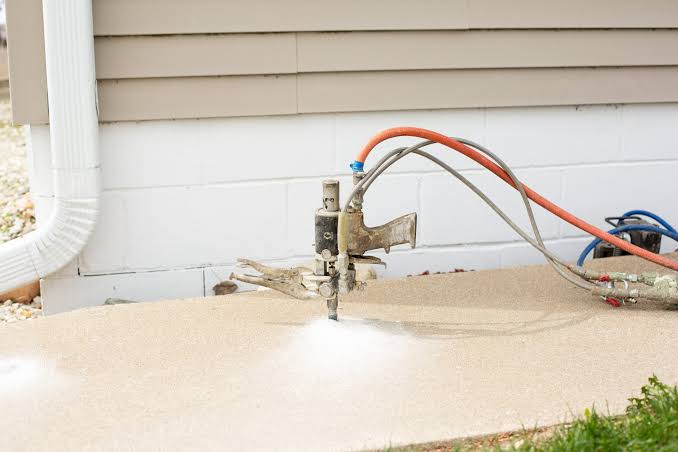
Polyurethane foam leveling can be done in winter in certain conditions; mudjacking generally cannot. Foam’s shorter cure time — 15 to 30 minutes — means it’s less exposed to temperature fluctuation than mudjacking slurry, which needs 24 to 72 hours. But “can be done” is not the same as “will hold.”
When ground temperatures drop below 40°F, the soil is either partially frozen or on its way there. Injecting foam into frozen or near-frozen ground means the material expands into a soil structure that will shift the moment temperatures rise. The leveling may look correct the day after the job. By April, after three or four freeze-thaw cycles, the slab has often moved again.
There are legitimate winter leveling scenarios. Interior garage slabs, basement floors, and covered patios are protected from frost and can be leveled year-round. Heated crawlspaces also maintain ground temperatures above the threshold. If your problem slab is outdoors and exposed, winter in a cold climate is almost always the wrong call — even if a contractor says they can do it.
What summer heat actually does to a leveling job
Midsummer concrete leveling — specifically July and August in hot climates — has a different failure mode than winter work, and most online guides skip it entirely. The problem isn’t that foam or slurry won’t cure. It’s that the soil beneath the slab is at its driest and most contracted during a summer drought, and leveling into contracted soil is leveling into a temporary state.
When fall rains come and the soil rehydrates, it expands. A slab that was perfectly level in August can develop a three-quarter-inch rise on one edge by November as the soil beneath it swells. This is most common on clay-heavy soils, which are common across the Midwest, Southeast, and parts of Texas.
In clay-heavy soil regions, summer concrete leveling jobs have a measurably higher callback rate than spring or fall work — experienced contractors in those areas know to warn customers or simply decline July–August bookings on exposed exterior slabs.
High ambient temperatures also affect foam expansion rates. Polyurethane foam expands faster in heat, which means a contractor has less time to position material correctly before it sets. In temperatures above 90°F, some foam formulations over-expand, creating uneven pressure beneath the slab. Reputable crews adjust their mix ratios for heat, but not all do — and you won’t know until the job is done.
Mudjacking vs. foam leveling: which method is more season-sensitive?
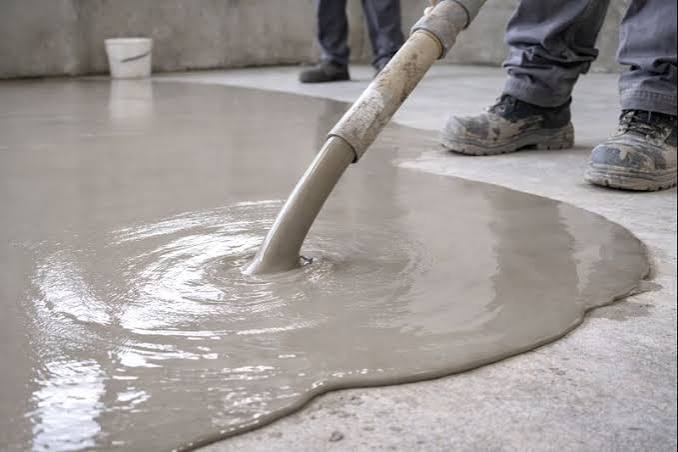
Mudjacking is significantly more season-sensitive than polyurethane foam leveling, and that single fact should influence when you schedule — and which method you choose. Mudjacking uses a slurry of water, soil, and cement that needs 24 to 72 hours to cure. During that window, the material is vulnerable to freeze-thaw damage, heavy rain washout, and temperature swings. Foam cures in 15 to 30 minutes and is largely indifferent to rain after the first hour.
| Factor | Mudjacking | Polyurethane foam |
|---|---|---|
| Minimum ground temp | 40°F | 35°F |
| Cure time before foot traffic | 24–72 hours | 15–30 minutes |
| Vulnerable to rain after install | Yes, 24 hours | No, after ~1 hour |
| Ideal season | Spring and fall only | Spring, fall; mild winters OK |
| Typical cost per sq ft (2026) | $3–$6 | $5–$25 |
| Hole size drilled in slab | 1–2 inch diameter | 5/8 inch diameter |
If you’re researching walkway leveling options and want to schedule outside the spring-fall window, foam is the more forgiving choice. The smaller injection holes, faster cure, and wider temperature range make it viable in more months of the year — though the soil stability caveat still applies regardless of method.
Understanding walkway leveling cost per square foot will help you budget realistically: mudjacking’s lower upfront cost can be offset by a higher likelihood of needing a second treatment if the job is done in poor seasonal conditions.
How long does concrete leveling actually take from start to walkable?
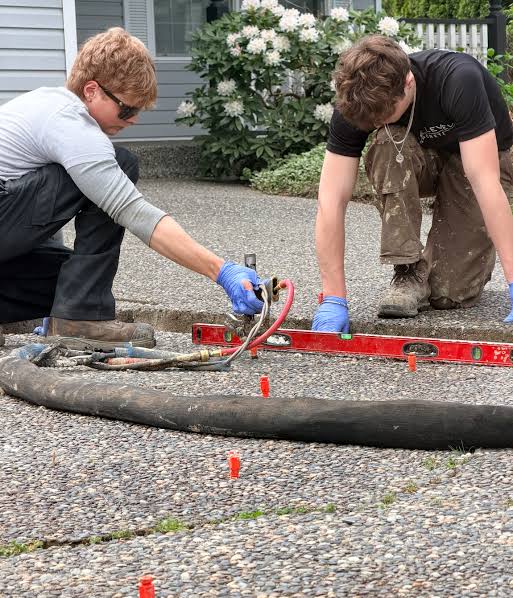
A typical residential concrete leveling job takes one to three hours on-site when conditions are correct. That covers two to four standard sidewalk or driveway slabs. The work-to-wait ratio is dramatically different between methods, and most people asking this question are really asking when they can use the surface again — not how long the crew is there.
| Stage | Mudjacking timeline | Foam leveling timeline |
|---|---|---|
| On-site work time (2–4 slabs) | 1–3 hours | 1–2 hours |
| Safe for foot traffic | 24–72 hours after | 15–30 minutes after |
| Safe for vehicle traffic | 48–72 hours after | Same day, 1–2 hours after |
| Full material strength | 7–14 days | 24–48 hours |
For beginners planning their first concrete leveling project, the practical takeaway is this: if you need the driveway or walkway accessible the same day, foam is your only realistic option. If you’re leveling a patio that doesn’t need to be used for a few days, mudjacking’s longer cure time is workable — and the lower price may be worth the wait.
The correct way to schedule a leveling job — step by step
Getting the timing right takes more than picking a warm month. Here’s the actual sequence that separates a repair that holds for five-plus years from one that needs redoing by the next spring — this is the process I’d walk through with any contractor before booking.
- Check your 10-day forecast for temperatures. You need nighttime lows above 40°F for at least 48 hours after the job. Don’t just check the day of — the day after matters more for mudjacking. Weather services like Weather.gov provide hourly forecast breakdowns at no cost.
- Identify your soil type. Clay-heavy soil is the red flag. If you’re in the Midwest, Southeast, or central Texas, assume you have clay content and avoid scheduling during extreme dry or wet periods. Your local USDA Web Soil Survey (websoilsurvey.sc.egov.usda.gov) can confirm soil composition by address.
- Check for recent soil saturation. If your area received more than two inches of rain in the past week, wait. Over-saturated soil shifts under injection pressure and won’t hold the leveled position. Ask the contractor directly: “What’s the soil moisture condition you need before you’ll do the job?”
- Choose your method based on season and urgency. Spring or fall with no timeline pressure: either method works. Winter or same-day use needed: foam only. Summer on clay soil: consider waiting for early fall.
- Confirm the contractor’s temperature threshold. Ask: “What’s the minimum temperature you’ll work in, and what happens to the repair if we get a freeze tonight?” A contractor who can’t answer that specifically is not one you want on a job where timing is everything.
- Verify the cure and traffic timeline in writing. Get a written confirmation of when foot and vehicle traffic are safe. If a mudjacking contractor tells you “a few hours,” push back — proper slurry cure is 24 to 72 hours, and premature traffic can displace material before it sets.
- Schedule a follow-up inspection for 30 days out. Most leveling failures are detectable within the first month. A contractor who won’t come back for a 30-day visual check is one who knows the job conditions weren’t ideal. Build this into the contract before you sign.
- Spring (April–May) and early fall (September–October) are the best times of year for concrete leveling — soil stability, not just air temperature, is the deciding factor.
- Mudjacking requires 40°F ground temperature and 24–72 hours of cure time; polyurethane foam cures in 15–30 minutes and tolerates slightly cooler conditions.
- Clay-heavy soils in summer drought conditions are the most common reason a correctly done leveling job fails within one season — this is almost never mentioned in standard advice.
- A 30-day post-job inspection is the real quality check — not the same-day appearance of the leveled slab.
Common questions about best time of year for concrete leveling
Is it OK to do concrete leveling in the fall, or is spring always better?
Early fall (September–October) is equally good as spring for concrete leveling in most climates. Soil has stabilized after summer contraction, temperatures are in the 50°F–70°F range, and you’re ahead of the freeze cycle. In the Southeast and Pacific Coast, fall often outperforms spring because soil moisture is more consistent.
Can foam concrete leveling be done in cold weather or winter months?
Polyurethane foam leveling can be done in temperatures as low as 35°F, and it cures in 15–30 minutes — making it more winter-viable than mudjacking. However, if the ground is frozen or in an active freeze-thaw cycle, the foam cures into an unstable base and the slab is likely to shift again once temperatures rise.
How long after concrete leveling can I walk or drive on the surface?
With polyurethane foam leveling, foot traffic is safe 15–30 minutes after the job and vehicle traffic within 1–2 hours. Mudjacking requires 24–72 hours before foot traffic and 48–72 hours before vehicle use. These timelines extend in cold weather — add 50% to mudjacking cure time when temperatures are below 50°F.
Why did my concrete leveling job fail after just one winter?
The most common causes are: the job was done in poor soil conditions (frozen, over-saturated, or drought-dry), the wrong season was chosen, or the underlying void was too large to hold with leveling alone. Clay soils that go through seasonal wet-dry cycles are the most common culprit. Replacement — not re-leveling — is the correct fix when the base has fully eroded.
Does concrete leveling cost more in summer than in spring or fall?
In most U.S. markets, summer concrete leveling runs 5–15% higher than spring or fall pricing due to peak-season demand. Scheduling in April or September gives you the best technical conditions and the best pricing at the same time. Call contractors in February to book a spring slot — the best crews fill up by March.
What temperature is too cold for concrete leveling to work correctly?
Ground temperatures below 40°F are too cold for mudjacking — the slurry won’t cure correctly. Polyurethane foam can work down to about 35°F air temperature, but frozen ground beneath the slab negates the benefit. The safe rule: if overnight lows will drop below 32°F within 48 hours of the job, postpone it.
How soon after heavy rain can concrete leveling be done?
Wait at least five to seven days after significant rainfall (two or more inches) before scheduling concrete leveling. Over-saturated soil shifts under injection pressure and won’t hold the leveled position. The surface may look dry while the soil underneath is still saturated — check a weather history tool and tell your contractor about recent rainfall before they quote the job.
The bottom line
Spring and early fall are the right answer to the question of the best time of year for concrete leveling — not because those seasons look good on a calendar, but because that’s when the soil beneath your slab is stable enough to hold a repair. Temperature matters. Soil moisture matters more.
If you take one thing from this: book in April or September, choose foam if you have any doubt about weather windows, and ask your contractor what they need from the soil — not just the sky — before they start. A contractor
See also: walkway leveling
See also: walkway leveling cost per square foot
Related: concrete leveling statistics
Related: how to prepare for walkway leveling appointment
Related: when to replace vs lift a sunken walkway
Related: sidewalk trip hazard repair for HOA