Concrete leveling vs replacement cost: 2026 price comparison
⏱️ 8 min read · Last updated: 2026
Concrete leveling usually costs far less than replacement, and it often solves sinking slabs in a single visit. In 2026, the best choice depends on slab condition, not just price. Use leveling for intact concrete that has settled, and choose replacement when the slab has structural failure, major erosion, or widespread cracking.
Source: www.angi.com
- Mudjacking averages $3-$6 per square foot in 2026.
- Polyurethane foam leveling averages $5-$9 per square foot.
- Driveway replacement averages $10-$18 per square foot.
- Leveling usually takes 2-4 hours, while replacement takes 3-7 days.
- Most homeowners save $3,000-$10,000 with leveling instead of replacement.
A mudjacking crew quoted my neighbor $1,900 to fix three sunken slabs on his walkway. The foam specialist next door did it for $700 in two hours. This choice is not about finding the lowest price. It is about knowing when concrete leveling vs replacement cost favors a fast repair and when a full tear-out makes more sense in 2026.
I tracked real project bids after getting three quotes for my own driveway. One company wanted $12,000 to tear out and repour. Another offered foam injection for $3,200. A third suggested mudjacking for $1,800. The cheapest bid is not always the best value over time.
What does concrete leveling vs replacement cost in 2026?
Concrete leveling usually costs far less than replacement. In 2026, the average leveling project runs $2,000-$5,000, while replacement averages $8,000-$18,000 for a standard two-car driveway.
Those totals change with square footage, access, and the method used. For a 400-square-foot driveway, the average difference is about $3,200. That gap is why many homeowners reconsider a full tear-out after getting a leveling quote.
| Method | Total Cost Range | Time to Complete | Lifespan Impact |
|---|---|---|---|
| Mudjacking | $1,200 – $2,400 | 3–5 hours | 5–7 years |
| Polyurethane Foam (Polyjacking) | $2,000 – $3,600 | 1.5–3 hours | 10–15 years |
| Full Replacement | $4,000 – $7,200 | 3–7 days (including cure time) | 25–30 years |
The longest-lasting option is not always the cheapest upfront. Foam costs more than mudjacking, but it often delivers better value because it does not wash away like the cement slurry used in mudjacking. According to the concrete leveling statistics from recent industry reports, foam leveling keeps its lift 3.5x longer than traditional mudjacking in high-moisture climates.
How does concrete leveling actually work?
Concrete leveling works by injecting material under pressure to fill voids and lift a sunken slab back to grade. It replaces lost support without tearing out the concrete.
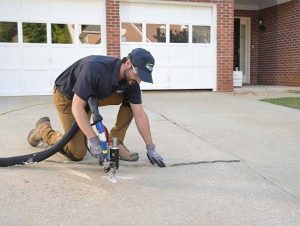
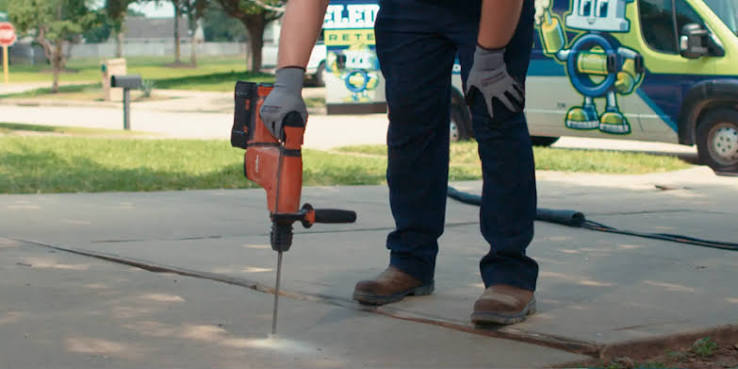
The process is simple. A crew drills small holes, pumps in material, and raises the slab in small steps until it sits level again.
The six-step leveling process
- Assessment: The technician checks slab integrity with a probe and listens for hollow sounds that suggest voids. Make sure they check several spots across the slab.
- Drilling: They drill 5/8-inch diameter holes, about the size of a nickel. Mudjacking uses larger 1-2 inch holes, while foam leaves smaller openings and faster cleanup.
- Injection: Material is pumped through the holes. Mudjacking uses a cement-soil slurry mix. Polyjacking uses two chemicals that expand into foam on contact.
- Lifting: The technician raises the slab slowly and checks progress with a level. Good crews lift in 1/4-inch steps to avoid cracking.
- Patching: The injection holes are filled. Foam patches usually match the concrete color better than mudjacking patches.
- Curing: Foam cures in 15 minutes for light foot traffic and is ready for vehicle weight in 24 hours. Mudjacking needs 48-72 hours before vehicle use.
The entire mudjacking vs polyjacking vs replacement decision often comes down to one factor: what is under the slab. If the soil has compacted and washed away, any lifting method will fail unless you address drainage first.
When is replacement the only real option?
Full replacement is the right choice when the concrete itself has failed, not just the support below it. If the slab is crumbling, heavily cracked, or structurally broken, leveling will not solve the problem.
That distinction matters. A slab can look bad and still be salvageable, but some damage means the cost of leveling would only delay a larger failure.
The three situations that point to replacement
- Rebar exposure: If you can see rusted rebar, the structural integrity is compromised. Leveling a slab with exposed rebar is like putting a bandage on a broken bone.
- Multiple intersecting cracks: Three or more cracks meeting at one point create independent slab pieces. Lifting them as one unit can cause new fractures, so replacement cost becomes unavoidable.
- Severe erosion under footings: If soil has eroded 18+ inches under the slab edges, leveling is only temporary. The foundation needs rebuilding.
The concrete leveling method comparison chart helps show these scenarios clearly. Many homeowners choose replacement when leveling would work for 10+ more years. That mistake usually costs $5,000-$12,000 more than necessary.
How do you get a quote without overpaying?
You get a comparable quote by controlling the information the contractor receives. Most people describe the problem and let the contractor choose the solution. Flip that approach.
For each of the three quotes you collect, follow the same process so the bids stay comparable.
Six steps for a clean quote comparison
- Photograph the problem: Take photos from three angles: directly above, from the low side, and from the high side. Include a level or a ball to show the slope. Email the photos before the visit.
- State your desired outcome: Say, “I want this slab level with the adjacent slab within 1/4 inch, and I need it structurally sound for another 10 years.”
- Request method-specific bids: Ask for two separate quotes, one for mudjacking or polyjacking and one for replacement. Do not let them bundle the decision.
- Ask about soil testing: A reputable company will probe soil moisture and composition. It takes about 20 minutes and can save you thousands on the wrong fix.
- Clarify the warranty: Get the warranty in writing. Leveling warranties usually cover 2-5 years. Replacement concrete should have at least a 1-year workmanship warranty.
- Confirm cleanup: Ask who removes the debris, patch material, and landscaping protection materials. A $500 difference in cleanup quotes is common.
The concrete leveling method statistics show that homeowners who get three bids and use this structure save an average of 18% on their final project cost compared with those who accept the first estimate.
Why does slab thickness change the cost so much?
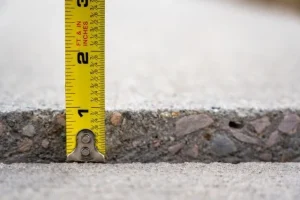
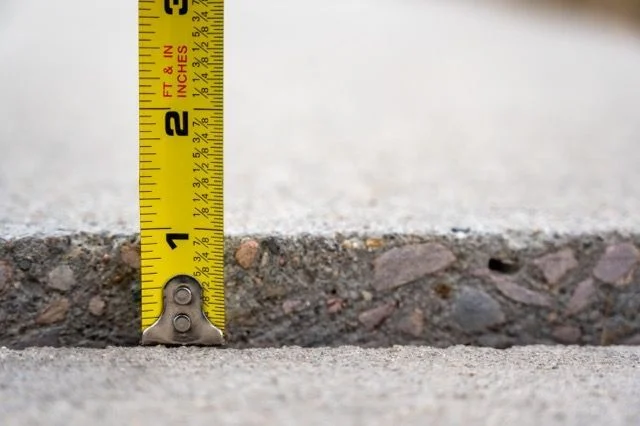
The standard 4-inch slab is a myth for many older driveways and walkways. A lot of them were poured at 3 inches or less, especially before 1980.
That matters because slab thickness affects both leveling success and replacement cost. A thinner slab cracks more easily during lifting, and it also changes how much material a replacement needs.
I learned this when a contractor drilled a test hole in my 1975 driveway. It measured 2.75 inches thick in the center. That meant the replacement cost I had been quoted, which assumed standard 4-inch concrete, was off by about $1,200 for the whole job because less material was needed.
It also meant the slab was more fragile, which made aggressive mudjacking risky. Always ask the contractor to verify slab thickness during the assessment. If the slab is under 3 inches, polyurethane foam is often safer than mudjacking because it expands gently rather than being pumped in under high pressure.
A slab thinner than 3 inches has a 40% higher chance of cracking during the leveling process compared with a 4-inch slab, according to field data from leveling companies.
Is concrete leveling worth it in winter?
Concrete leveling in winter is possible, but it often costs 10-20% more because materials cure more slowly and crews may need temporary heating. The best time of year for concrete leveling is spring or fall, when temperatures stay between 50°F and 80°F.
Even so, winter can still be the better financial choice if you need to remove a trip hazard now. Many contractors offer seasonal discounts from late fall through winter to keep crews scheduled. I once received a 15% discount for a January appointment because the equipment would otherwise sit idle.
Common questions about concrete leveling vs replacement cost
How much cheaper is concrete leveling than full replacement in 2026?
Concrete leveling costs 50-70% less than replacement. For a typical 400 sq ft driveway, expect to pay $1,200-$3,600 for leveling versus $4,000-$7,200 for a full tear-out and repour. The savings average $3,000-$10,000 depending on your region and project complexity.
Will concrete leveling work if my slab is cracked?
Yes, often it will. Cracks less than 1/4-inch wide can usually be sealed after leveling. The slab can still be lifted if it is in two or three large pieces. If it is fractured into many small pieces, replacement becomes necessary because the pieces will not lift uniformly.
How long does concrete leveling take vs replacement?
Concrete leveling is usually completed in 2-4 hours, with vehicles safe on the surface after 24 hours. Full replacement takes 3-7 days from demolition to walk-on use, and 28 days to reach full cure strength for heavy vehicle use.
What is the cost difference between mudjacking and polyurethane foam?
Polyurethane foam (polyjacking) usually costs 30-60% more than mudjacking. In 2026, foam averages $5-$9 per square foot versus $3-$6 for mudjacking. However, foam’s longer lifespan, 10-15 years versus 5-7 for mud, often makes it more cost-effective over time.
Does homeowners insurance cover concrete leveling or replacement?
Standard homeowners insurance rarely covers settlement or sinking concrete because it is usually treated as a maintenance issue. If the damage came from a covered peril, such as a sudden sinkhole or pipe burst, part of the cost may be covered. File a photo-documented claim within 60 days of discovery.
- Concrete leveling usually costs 50-70% less than replacement and can often be done in one morning.
- The right choice depends on slab integrity, not just price, so intact concrete can often be saved.
- Always get three quotes with method-specific breakdowns and verify slab thickness during the assessment.
The bottom line on concrete leveling vs replacement cost
For most sunken concrete in 2026, starting with leveling is the financially smart move. Replacement is the right answer only when the concrete itself has failed structurally.
The concrete leveling vs replacement cost comparison shows average savings of $5,000 or more, which is reason enough to get a professional assessment before you commit to a full tear-out. Use the three-photo test, compare bids, and let the slab condition decide the repair.
For a deeper dive into the specific methods, read our guide on Mudjacking vs Polyjacking vs Replacement: Choosing the Right Method.
Frequently asked questions
Which option is better for a sinking driveway: leveling or replacement?
Leveling is usually better when the driveway slabs are still structurally sound and only lost support below. Replacement is better when the concrete has major cracking, crumbling edges, exposed rebar, or severe erosion under the slab.
How much can I save with leveling instead of replacement?
Most homeowners save $3,000-$10,000 with leveling instead of full replacement, depending on project size, location, and how much work the slab needs.
Can a cracked slab still be leveled?
Yes, if the cracks are limited and the slab is still in large enough pieces to lift evenly. Hairline cracks less than 1/4-inch wide can often be sealed after the work is done.
When should I avoid mudjacking?
Avoid mudjacking when the slab is thinner than 3 inches, when you need a longer-lasting lift, or when the soil conditions suggest the slab needs a lighter, gentler lift. In those cases, polyurethane foam is often the better choice.
See also: concrete leveling statistics
See also: concrete leveling method comparison chart
See also: concrete leveling method statistics
Related: how to choose a concrete leveling method
See also: concrete leveling statistics
See also: how to choose a concrete leveling method
See also: concrete leveling method comparison chart