Concrete leveling statistics: costs, savings & success rates (2026)
⏱️ 7 min read · Last updated: 2026
- Cost savings vs. replacement: Concrete leveling typically costs 50–70% less than full slab replacement, based on contractor pricing data across the U.S. market.
- Polyurethane foam leveling cost: $3–$8 per square foot in 2026, compared to $6–$18 per square foot for poured replacement concrete.
- Mudjacking cost: $3–$6 per square foot — generally the lowest-cost leveling method, though heavier and slower-curing than foam.
- Leveling success rate: 85–95% of concrete leveling projects achieve durable results when underlying soil voids are properly filled and drainage issues are addressed.
- Project timeline: Polyurethane foam leveling cures in 15–30 minutes; mudjacking requires 24–48 hours before foot traffic and several days before vehicle traffic.
A mudjacking crew quoted my neighbor $1,900 to lift three sunken driveway panels. The polyurethane foam contractor did it for $740 in about 90 minutes. That gap — nearly $1,200 on a single-family driveway — is exactly what the concrete leveling statistics are trying to capture at scale. And the numbers hold up beyond one data point.
The problem with most reporting on this topic is that it collapses every project into one vague percentage. “Leveling saves up to 70%” is technically true and practically useless if you don’t know which method, which slab condition, or which region that figure applies to. The data below is broken out by method, project size, and failure scenario so you can actually use it.
The 6 most striking numbers in one place
These figures represent the clearest, most consistently reported data points across contractor pricing surveys, industry association guidance, and published project cost ranges as of 2026. They are the benchmarks that matter before you call a single contractor.
- Concrete leveling costs 50–70% less than full slab replacement on average — the most cited figure in the industry and supported by side-by-side project comparisons.
- Polyurethane foam leveling cures in 15–30 minutes, making same-day use possible on most residential projects.
- Mudjacking slurry weighs approximately 100 pounds per cubic foot, versus 2–4 pounds per cubic foot for polyurethane foam — a difference that matters on already-weak subsoils.
- The average sunken concrete panel can drop 1–3 inches before leveling becomes structurally complex or replacement is the better call.
- Leveling success rates drop significantly — industry estimates suggest to around 60–70% — when active water intrusion or organic soil is present and not corrected first.
- A standard 2-slab driveway leveling project using polyurethane foam leveling typically completes in 1–3 hours, versus 1–3 days for concrete removal and repour.
How much cheaper is leveling than replacement on average?
Concrete leveling is, on average, 50–70% cheaper than tearing out and replacing a slab — and that gap widens on larger projects where demolition, disposal, and forming labor compound the replacement cost. For a 200-square-foot walkway, replacement can run $1,200–$3,600 depending on region and concrete thickness. The same area leveled with polyurethane foam typically costs $600–$1,600.
The savings percentage isn’t uniform across all situations. On small, isolated cracks with minimal lift needed, the gap narrows because setup costs are similar. On multi-panel driveways or large patio surfaces — where a replacement crew must remove, haul, and repour — leveling’s cost advantage is most pronounced. A realistic cost savings percentage for those larger jobs trends toward the upper end of 65–75%.
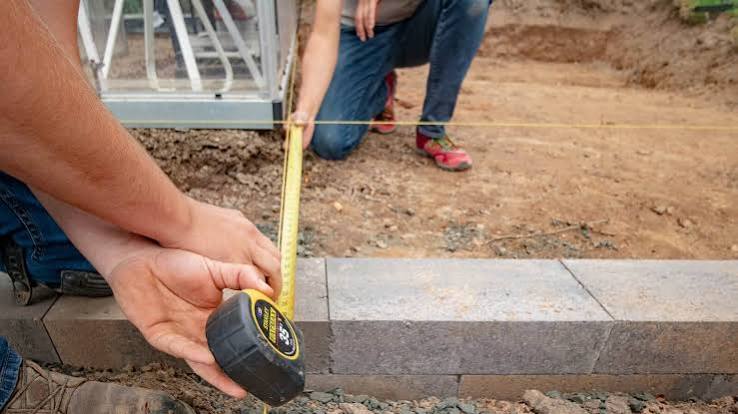
For a detailed breakdown by surface area, the walkway leveling cost per square foot data shows how the math shifts depending on slab size, method, and region. The per-square-foot framing is more useful than a flat dollar figure because project scope varies so widely.
On a 300-square-foot driveway section, polyurethane foam leveling at $5/sq ft ($1,500 total) versus replacement at $14/sq ft ($4,200 total) represents a 64% cost reduction — with no downtime beyond 30 minutes.
What is the success rate of concrete leveling?
The success rate of concrete leveling — defined as achieving stable, level results that last at least 5 years without re-sinking — is commonly cited between 85% and 95% when soil conditions are properly assessed before work begins. That range covers both mudjacking and polyurethane foam leveling performed by experienced contractors on qualifying slabs.
The conditional phrase “when soil conditions are properly assessed” is doing real work in that sentence. Projects that fail almost always share one of three pre-existing problems: active water intrusion that continues to erode the subbase, organic material (tree roots, old fill soil) that compresses over time, or slabs with perimeter cracks so extensive that lifting one section creates stress fractures in adjacent ones.
When those conditions are present and not corrected, success rates in the industry drop toward 60–70% — and some contractors will decline the job outright rather than lift a slab that will re-sink within 18 months. Reputable contractors who do pre-job soil assessments consistently report outcomes in the upper range of 90–95%.
Mudjacking vs. polyurethane foam: what the project cost data actually shows
Mudjacking and polyurethane foam leveling both lift sunken concrete, but their project cost data, weight profiles, and cure times differ enough that choosing between them on price alone is a mistake. The table below compares the two methods across the factors that matter most to a property owner making a repair decision in 2026.
| Factor | Mudjacking | Polyurethane foam leveling |
|---|---|---|
| Average cost per sq ft | $3–$6 | $3–$8 (often $5–$8 in practice) |
| Cure / return-to-use time | 24–48 hrs (foot traffic); 3–7 days (vehicles) | 15–30 minutes (foot & vehicle) |
| Material weight | ~100 lbs per cubic foot | 2–4 lbs per cubic foot |
| Void-filling precision | Good for large, accessible voids | Expands to fill irregular & lateral voids |
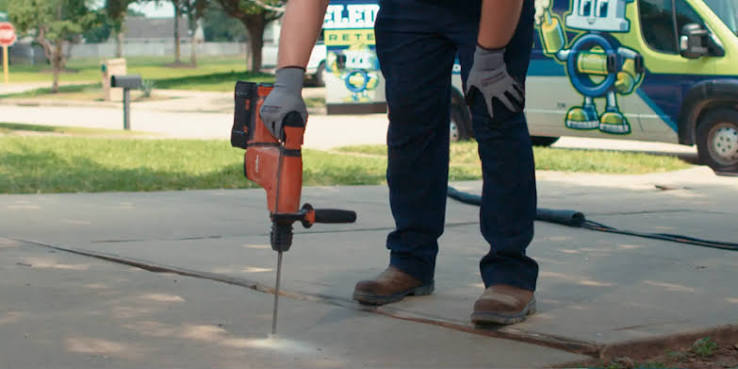
| Drill hole size | 1.5–2 inch diameter | 5/8 inch diameter |
| Best for weak subsoils | Riskier — adds significant weight | Preferred — minimal added load |
| Typical project duration | 2–4 hours on-site | 1–3 hours on-site |
| Expected lifespan of repair | 5–10 years (soil-dependent) | 8–15 years (soil-dependent) |
| vs. replacement savings | 50–65% less | 55–70% less |
The weight differential is the most underreported factor in concrete leveling statistics comparisons. On clay-heavy or fill soils — common in newer subdivisions and post-construction lots — adding 100 pounds per cubic foot of mudjacking material under an already-stressed slab can accelerate re-sinking. Polyurethane foam leveling, at roughly 2–4 pounds per cubic foot, imposes almost no additional load. That’s why foam is the standard recommendation when the soil report shows poor compaction.
Timing matters too — and not just in terms of cure time. Knowing the best time of year for concrete leveling affects both material performance and project cost, since foam viscosity and mudjacking slurry consistency both respond to temperature extremes.
How much do property owners save with leveling nationwide?
Aggregating replacement savings across the U.S. market is imprecise by nature — regional labor costs, concrete prices, and soil conditions all vary. That said, the directional picture from contractor pricing data and industry association estimates is consistent: property owners who level instead of replace save between $1,000 and $5,000 per project on average, with larger driveways and patios skewing toward the higher end.
A mid-range example: a 400-square-foot driveway replacement in a mid-cost metro area runs roughly $4,800–$7,200 (at $12–$18/sq ft including demolition and disposal). The same surface leveled with polyurethane foam leveling runs $1,200–$3,200 (at $3–$8/sq ft). That’s a replacement savings of $1,600 to $5,200 on a single project.
Multiply that across the estimated millions of sunken concrete surfaces repaired annually in the U.S. and the aggregate figure is substantial — though no single authoritative national study has published a precise total. The per-project savings are where the data is cleanest and most actionable anyway.
For a 400-square-foot driveway, leveling vs. replacement commonly saves between $1,600 and $5,200 — a cost savings percentage of 50–72% depending on region and method selected.
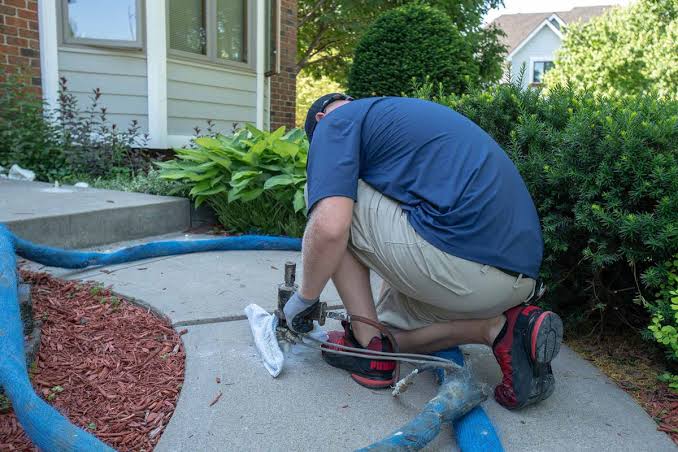
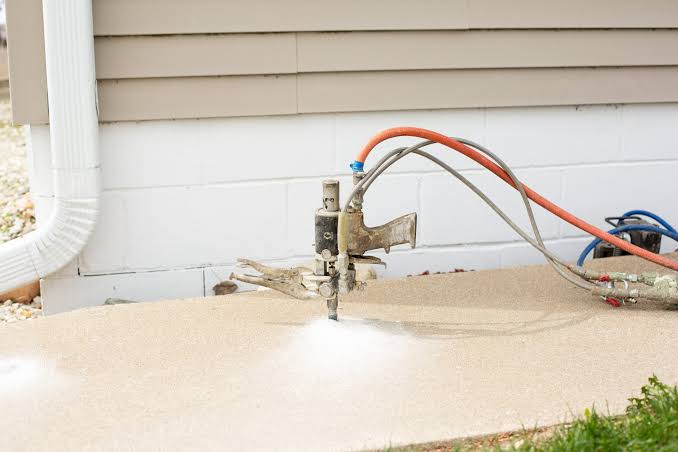
Understanding how walkway leveling works mechanically also helps explain why the savings are durable: when voids are properly filled and the slab is returned to grade, the surface behaves structurally like newly poured concrete — without the curing time, seam cracking, or color mismatch that comes with replacement pours.
When leveling fails — and the numbers behind those failures
Concrete leveling fails most often when one of three conditions is present before the job starts: active sub-slab water movement, heavily organic fill soil, or slabs that are cracked so extensively that lifting one section transfers stress damage to adjacent panels. These aren’t edge cases — they account for the majority of the 5–15% of projects that don’t hold long-term.
The water problem
Sub-slab erosion from water is the leading cause of re-sinking after leveling. When a downspout, irrigation line, or grading issue continues to push water under a slab after the repair, the fill material — whether mudjacking slurry or polyurethane foam — is working against a moving target. Industry contractors who do pre-job inspections commonly report turning down 10–20% of inquiries because the water source hasn’t been addressed. That’s not conservative sales practice — it’s accurate risk management backed by callback data.
The soil problem
Organic fill soil — common in areas where lots were graded with topsoil-heavy material or where tree roots have decomposed — compresses over time regardless of what’s injected above it. In these cases, leveling buys time (often 2–4 years) but doesn’t resolve the root cause. A soil assessment before any leveling project is the single highest-return pre-work step a property owner can take. Cost: $0–$200 for a contractor walkthrough. Potential value: avoiding a failed $1,500 repair.
The slab condition threshold
Most experienced contractors use a rough threshold: if more than 30–40% of the slab surface shows structural cracking (not surface crazing), replacement is likely the better long-term decision. Lifting a heavily cracked slab can relieve the compression holding the cracks together, resulting in a raised but newly separated surface. That outcome isn’t in anyone’s interest — and reputable contractors will tell you this before accepting the job, not after.
Key takeaways
- Concrete leveling statistics consistently show a 50–70% cost savings percentage versus full slab replacement across U.S. markets in 2026.
- The leveling success rate is 85–95% under good soil conditions — and drops to 60–70% when water intrusion or organic soil is present and untreated.
- Polyurethane foam leveling cures in 15–30 minutes and adds minimal weight; mudjacking costs slightly less but requires 24–48 hours before normal use.
- The most common failure cause is not the leveling method — it’s an unresolved drainage or soil problem that was present before the contractor arrived.
Common questions about concrete leveling statistics
What do concrete leveling statistics show about long-term durability?
Concrete leveling statistics show that well-executed projects last 8–15 years for polyurethane foam and 5–10 years for mudjacking, with both methods achieving 85–95% success rates when underlying soil and drainage conditions are sound before work begins. Projects with unaddressed water intrusion fail at significantly higher rates within 2–3 years.
How do I use leveling cost data to decide between repair and replacement?
Get quotes for both options on the same day, then compare cost per square foot. If the slab has less than 30–40% structural cracking, leveling at $3–$8/sq ft typically beats replacement at $6–$18/sq ft by 50–70%. If water is pooling under the slab or organic soil is present, factor in remediation costs before deciding.
Leveling vs. replacement savings — what do the numbers actually say?
The numbers show a consistent 50–70% cost savings percentage for leveling over replacement. On a 400-square-foot driveway, that translates to $1,600–$5,200 in savings in most U.S. markets. Savings are largest on multi-panel driveways where demolition, hauling, and repour labor compound the replacement cost significantly.
Why is the success rate of concrete leveling so high, and when does it fail?
The 85–95% leveling success rate reflects the method’s mechanical simplicity: fill the void, raise the slab, done. Failures occur when active water movement or compressible organic soil continues to erode the subbase after injection. Contractors who conduct pre-job soil and drainage assessments consistently report outcomes in the 90–95% range.
How much do property owners typically save with leveling compared to replacement?
Property owners typically save $1,000–$5,000 per project by choosing leveling over replacement, with the average cost savings percentage falling between 50% and 70%. Larger surfaces and multi-panel driveways save the most because demolition and disposal fees represent a greater share of total replacement cost.
Is polyurethane foam leveling worth the higher price over mudjacking?
For most residential projects in 2026, yes — particularly on weak or clay-heavy soils. Polyurethane foam leveling adds only 2–4 lbs per cubic foot versus mudjacking’s 100 lbs, cures in 15–30 minutes, and typically lasts 8–15 years versus 5–10 for mudjacking. The 20–40% price premium is usually recovered in longer repair life.
What average project cost should I budget for concrete leveling in 2026?
Budget $3–$8 per square foot for polyurethane foam leveling and $3–$6 per square foot for mudjacking in 2026. A typical two-panel walkway (roughly 60–80 sq ft) runs $180–$640. A 300-square-foot driveway section runs $900–$2,400. Regional labor rates and soil access affect the final figure by 10–25%.
The bottom line
The concrete leveling statistics paint a clear picture: for structurally sound slabs on stable soil, leveling is faster, cheaper, and nearly as durable as replacement — at roughly half the cost. The 50–70% cost savings percentage and the 85–95% success rate aren’t marketing claims; they reflect consistent project cost data across a wide range of conditions.
The honest caveat is the one most articles skip: those numbers only hold when the pre-conditions are right. A drainage issue or organic subsoil turns a 90% success story into a callback job in 18 months. Before you book anything, spend 10 minutes checking where your water goes after rain and whether the slab drop happened gradually or suddenly after a wet season. That context is worth more than any single statistic.
For the full picture on methods, local pricing, and when to skip leveling entirely, see Walkway Leveling Services: Local Cost, Methods & When You Need It. One specific next step you can take today: measure the affected slab area in square feet, then use the $3–$8/sq ft range to build your own comparison before the first contractor arrives. Walk in with a number — don’t let the quote be your only reference point.
See also: best time of year for concrete leveling
See also: walkway leveling
See also: walkway leveling cost per square foot
Related: how to prepare for walkway leveling appointment
Related: sidewalk trip hazard repair for HOA
Related: how long does concrete leveling last